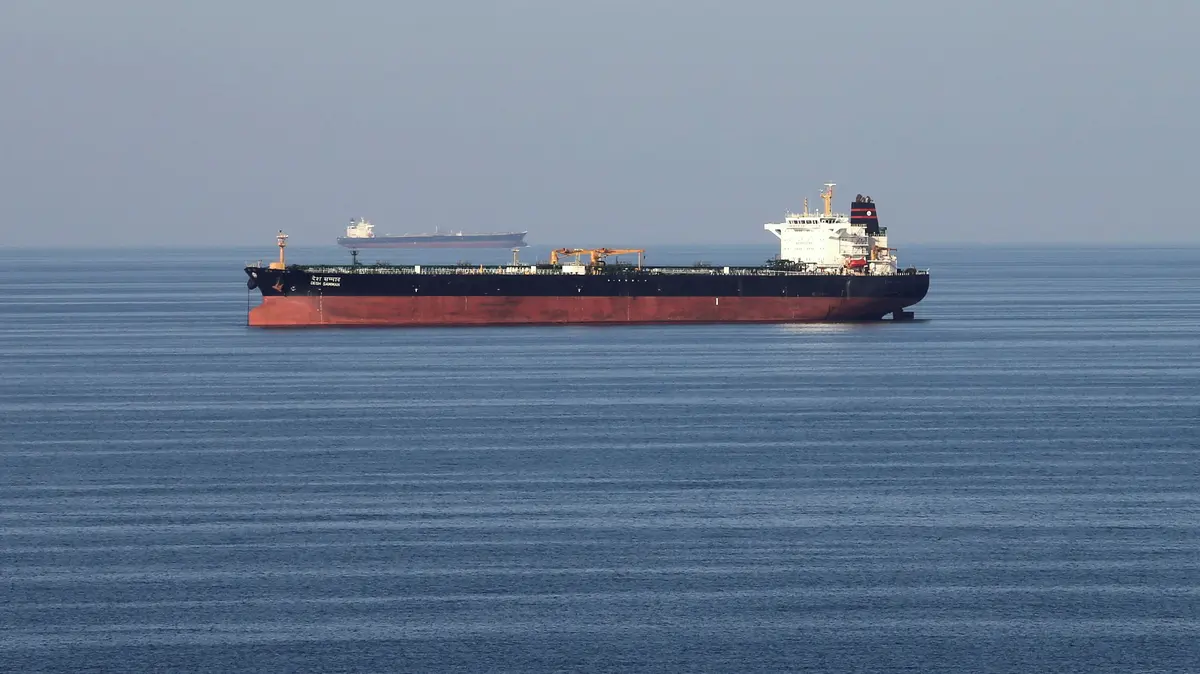
The US Navy attacked an Iranian-flagged merchant ship in the Gulf of Oman and took control of it, US President Donald Trump announced on Sunday. In addition to the fact that Iran began to stop and return ships in the Strait of Hormuz, according to the British Military Maritime Service (UKMTO), the Iranian Revolutionary Guards opened fire on two merchant vessels on Saturday.
Under normal circumstances, a fifth of the world’s oil supplies pass through the strait.
However, according to data from the Kpler company, more than 20 vessels transporting oil products, metals, gas and fertilizers passed through on Saturday. It was the busiest day in the strait since March 1.
“The news looks bad. There seems to be disagreement, which has led to a slight re-escalation of tensions,” investment strategist Damien Boe of Wilson Asset Management said, according to Reuters. “However, I think that both sides want to reach an agreement in the end – that is one of the reasons why the market is optimistic and there is not too much of a sell-off,” he added.
The week before last, the United States and Iran concluded a two-week truce, which is supposed to be used for negotiations to end the conflict. The ceasefire and the deadline for negotiations ends on Tuesday. Last week on Monday, the US announced that it had begun a naval blockade of Iranian ports and coasts.
At the end of last week, Tehran announced the opening of the Strait of Hormuz for navigation. However, the US said it would continue its blockade of Iranian ports, and Iran then announced the re-closure of the strait.
The market clings to the hope of an early end to the conflict
Final fuel prices at gas stations depend on oil prices. Friday’s opening of the Strait of Hormuz brought immediate relief to the oil market, according to Purple Trading analyst Peter Lajsko, which was quickly reflected in the price of oil.
After the strait was closed again to shipping, oil prices on the market are going up again quickly. “Currently, the news does not look particularly positive. However, overall the situation has improved. We have had prices at 120 dollars per barrel several times this year, now they are below 100 dollars. The wholesale price of diesel has dropped by thirty percent,” pointed out Lajsek.
He expects that the wholesale prices of fuel could fall even further by lower units of crowns due to Friday’s significant drop in oil prices. “That effect is still there on the market. And I think the market is looking forward to a close truce, which could happen relatively soon,” said the analyst on Monday morning for Radiožurnál.
The maximum fuel prices set by the state are CZK 43.13 per liter of diesel on Monday and CZK 41.33 for Natural 95.