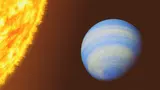
The planet with the designation LHS 3844 b also bears the name Kua’kua, which means butterfly in the indigenous language of Costa Rica. It orbits a star smaller and less luminous than the Sun and is about 49 light-years (464 billion kilometers) from Earth.
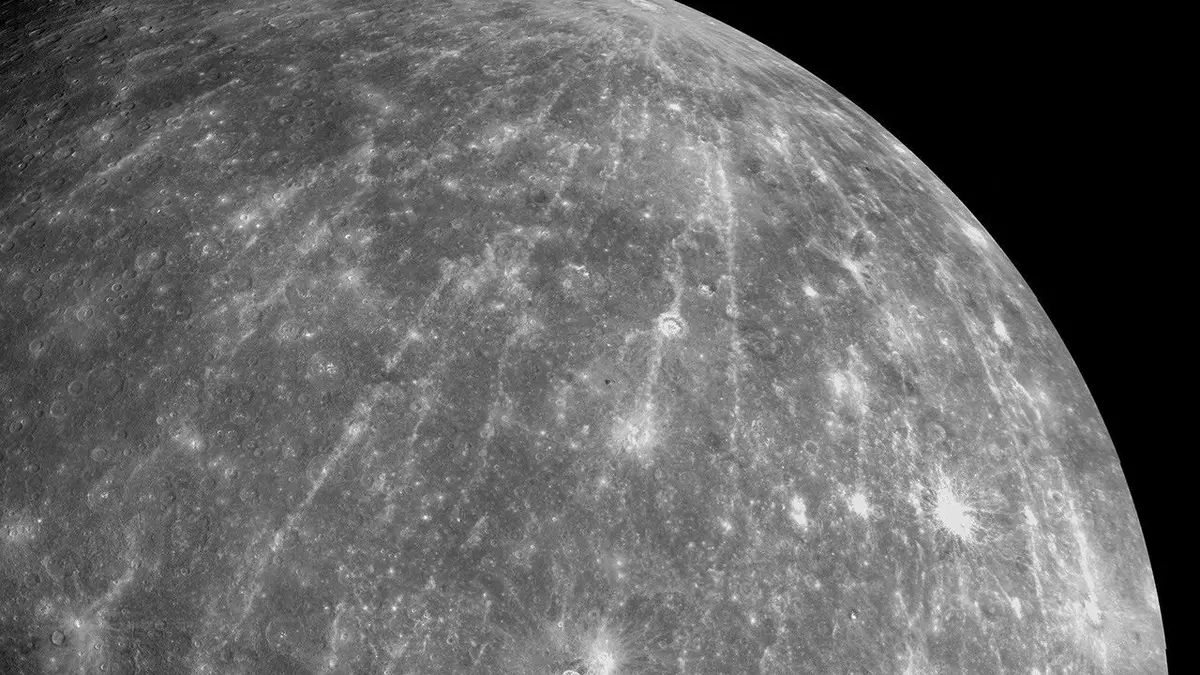
“This planet is not a pretty place,” said astronomer Laura Kreidberg, executive director of Germany’s Max Planck Institute for Astronomy and lead author of the study, published this week in the journal Nature Astronomy. “It’s a hellish, barren rock – much more like Mercury than Earth. There’s no trace of an atmosphere. Instead we see a dark surface, probably old. Imagine a bare rock hurtling billions of years through space. You wouldn’t want to go there,” she added to Reuters.
On the “day” side of the planet, the temperature is around 725 °C. No light was detected on the “night” side.
The observations indicate an ancient planetary surface covered with dark regolith – loose, fragmented rock material that covers the solid bedrock and was formed as a result of eons of micrometeorite bombardment and exposure to stellar radiation.
“Since LHS 3844 b lacks such a silicate crust (what our planet has – note red.), it can be concluded that Earth-like plate tectonics does not apply to this planet, or is ineffective,” quotes the lead author of the study, Sebastian Zieb from the Harvard & Smithsonian Center for Astrophysics in Massachusetts, on his Max Planck Society website. “This planet probably contains little water,” he adds.
Under the microscope thanks to the Webb telescope
The Webb telescope, which NASA launched into orbit in 2021 and began operation a year later, enabled revolutionary progress in the study of exoplanets. Thanks to its powerful infrared observation capabilities, it can reveal the chemical composition and internal dynamics of exoplanet atmospheres and even show what types of clouds are found in them.
Thanks to the telescope, astronomers can now directly study the geology and surface composition of exoplanets, said Sebastian Zieba. “It was challenging for us before the James Webb telescope was launched. But it now puts the Earth and the Solar System as a whole into a wider context and allows us to verify whether the processes or surface composition we know from the Solar System are common to other stars,” he said.
“It’s as if we suddenly cleaned our glasses and saw the planets clearly for the first time,” Kreidberg added.