Gaseous dysentery is caused by Clostridium bacteria, named after the gas bubbles that form under the skin. Bacteria thrive in necrotic tissue without oxygen, causing the patient severe pain, swelling, tissue discoloration, and a popping sensation when the gas moves.
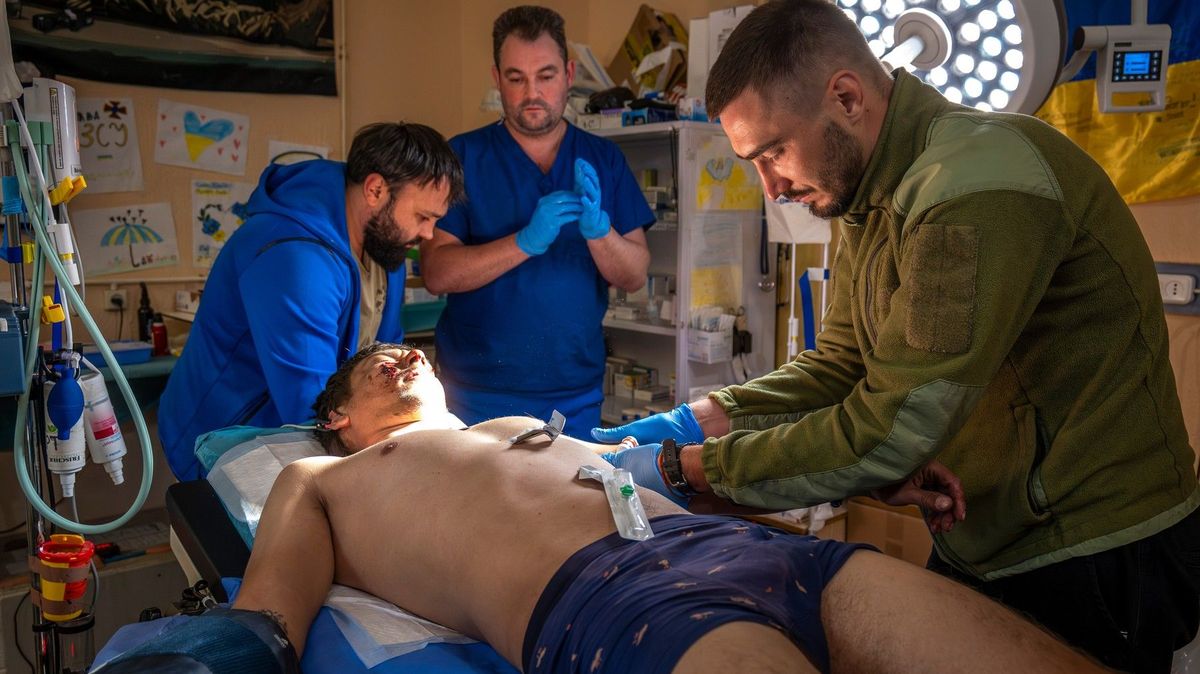
Infection usually occurs with severe injuries, such as gunshot wounds, when the person receives delayed treatment. “People don’t get to the hospital until a few weeks after they were injured. Before that, they were in underground bunkers and kept alive as best they could,” Alex, a volunteer medic from the Zaporizhia region, told The Telegraph.
The war of drones essentially made it impossible to evacuate wounded soldiers. And in the conditions they are in, the infection spreads at an alarming rate. Most medical care now takes place in bunkers and basements of abandoned buildings, the only places drones can’t reach. One medic who recently returned from one of these makeshift clinics did not leave the underground for three weeks because it was too dangerous.
“The longer you wait, the more limited the reconstructive options are because there is a progression of dead and dying tissue… Infection becomes the main problem in these types of wounds,” said Alastair Beaven, an orthopedic surgeon who served in Afghanistan.
“Gas dream is something you learn about in school… But you see it in Ukraine because people are sitting in bunkers with severe injuries and not getting proper care. You just can’t get them to the hospital fast enough to treat them properly,” Alex said.
Underground facilities are also often non-sterile and the delivery of medical supplies is extremely difficult, as drones often target convoys and vehicles.
Extremely life-threatening infection
Treating patients with flatulence is difficult and recovery is far from guaranteed, even in the best hospitals. “Treatment for flatulence normally involves surgical removal of dead, infected or damaged tissue along with very strong doses of antibiotics,” said Lindsey Edwards, associate professor of microbiology at King’s College London.
“It is an extremely life-threatening infection. If untreated, the mortality rate is close to 100 percent,” she added.
In Ukraine, however, the described surgical intervention, as well as the targeted use of antibiotics, is often almost impossible due to limited access to laboratories. “Normally, you’d examine the microbes, culture them and use different techniques to see if there’s any drug resistance,” Edwards said, adding, “You’d also test which antibiotics would be most effective. All of that is impossible in field hospitals.”
According to doctors, resistance to antibiotics is currently a big problem in Ukraine. It rises not only as a result of injuries and delayed or incomplete antibiotic treatment, but above all the frequent use of broad-spectrum antibiotics, which all support the spread of drug-resistant bacteria. “One of the biggest problems we have is that there has been a huge increase in antibiotic resistance,” Alex said.