
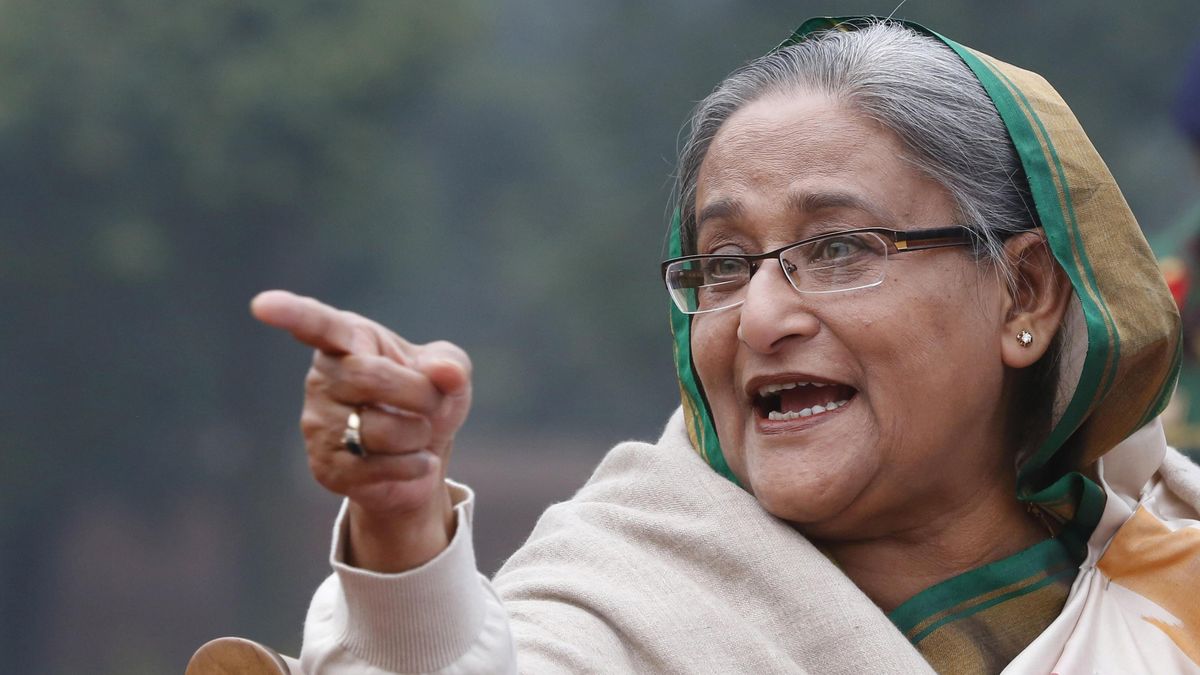
“Hasína Vadžídová committed crimes against humanity with her incitement, order and non-acceptance of criminal measures,” said one of the judges when delivering the verdict. Undisputedly, she ordered the killing and elimination of the protesting students, the tribunal said unanimously. Survivors of the victims applauded in the hall when the verdict was delivered. The trial lasted several months.
For the nation, which is still recovering from the popular uprising, the verdict represents the culmination of the event, writes the American CNN.
Seventy-eight-year-old Vadžídová bloodily suppressed student protests last year, which led to the collapse of her government. According to the indictment, she ordered the hanging of young protesters and incited the intervention forces to use lethal weapons, drones and helicopters. He has long denied the accusation. It also ordered the security forces and its party, the People’s League, to carry out targeted violence against women and children, burn bodies or deny medical care to the injured. The recording of one of the former prime minister’s phone calls served as key evidence.
Peaceful student demonstrations, which started due to quotas for jobs in the state administration, turned into nationwide pressure for the resignation of the Prime Minister of Bangladesh. The turning point was government repression, during which, according to the UN Office for Human Rights, almost 1,400 people died and over 25,000 were injured.
The transitional government of Nobel Prize winner Muhammad Yunusem states that the trials with Vajidova are a crucial step towards restoring accountability and public trust in the country’s democratic institutions.
“The verdicts against me were handed down by a rigged tribunal set up and presided over by an unelected government without a democratic mandate,” Vajidova said in a statement her Awami League party shared on social media after the verdict. At the same time, the tribunal was established by Vadžídová herself in 2009 to investigate crimes committed during the struggle for independence from Pakistan in 1971.
“I reject ICT’s other accusations of human rights violations as baseless. I am very proud of my government’s record in the field of human rights and development,” she added. The UN described the verdict as “an important moment for the victims”. At the same time, she defined herself against the death penalty, which she considers inadmissible from the point of view of humanity.
The former prime minister has been in voluntary exile in the Indian capital, New Delhi, since August 2024. So she was not at the judgment.
Vajidova and her Awami League party ruled the South Asian country with a heavy hand from 2009 until her ouster in 2024. Analysts fear that Monday’s verdict could trigger a wave of political chaos before the national elections, which are to be held in February 2026, CNN points out.
Government officials in Dhaka called on the Indian government to immediately hand over Vajidova to the Bangladeshi authorities.
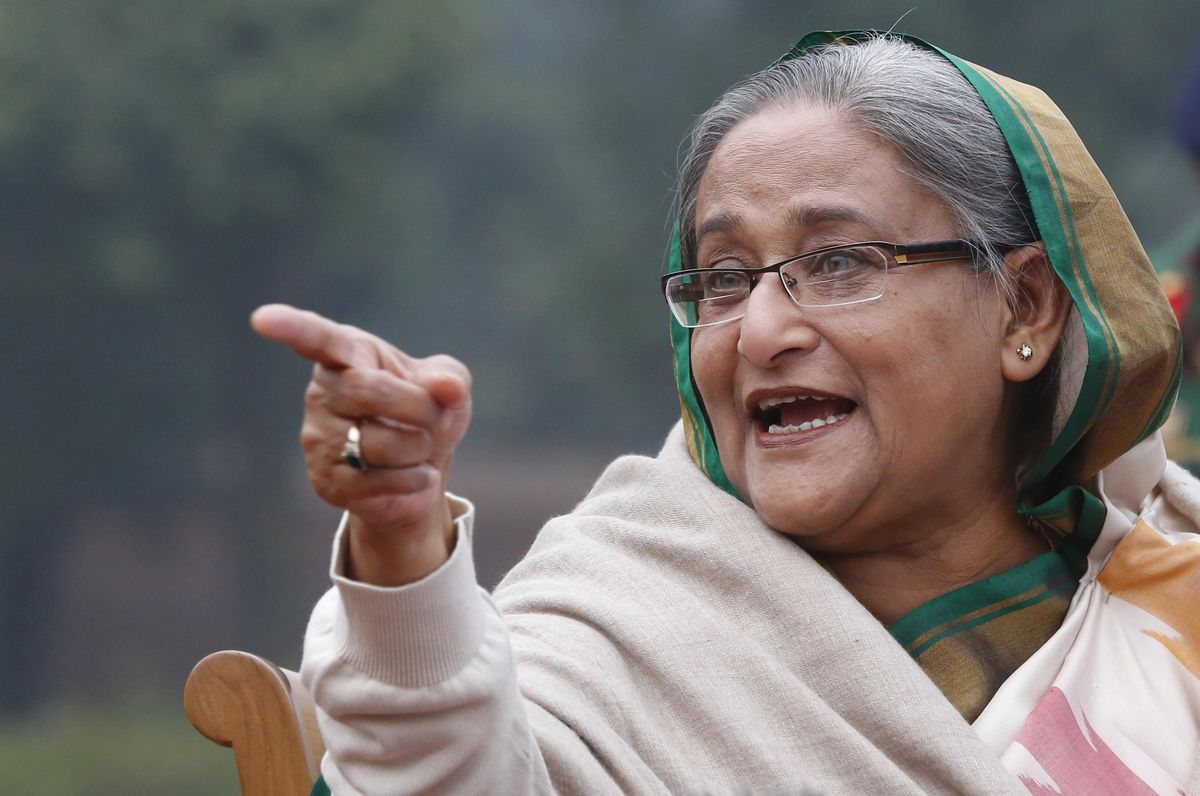
Photo: Rajesh Kumar Singh, CTK/AP
Prime Minister Sheikh Hasina Vadžídová
Sheikh Hasina Vadžídová
Sheikh Hasina Vadžídová (1947) is the eldest daughter of Sheikh Mujibur Rahman, the founder of Bangladesh. She was interested in politics from an early age, when she witnessed the struggle for Bengali autonomy and independence from Pakistan. After the military coup in 1975, during which her father, mother and three brothers were murdered, she and her sister had to go into exile. In 1981, she returned to Bangladesh to lead the Awami League party founded by her father. After years in the opposition, she became prime minister for one term in 1996. She returned to power in 2008 and remained at the head of the country until 2024, when student unrest in the country deposed her. Hasini has long faced criticism for political violence, intimidation of voters and harassment of the media and opposition representatives.
