
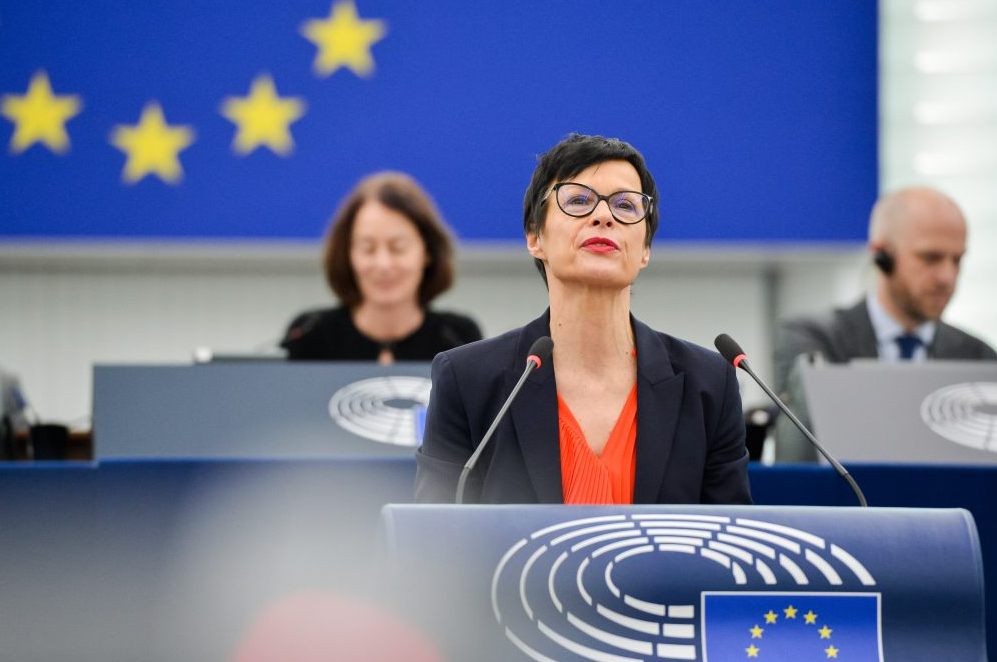
The European Commissioner for Enlargement, Marta Kos, stated that after the funeral of Ratko Mladic, convicted of genocide and war crimes in Bosnia and Herzegovina, held with state honors in Belgrade, the European Union should clarify whether Serbia is still a suitable candidate for EU membership.
Kos said that Serbia is at a crossroads, as the accession process requires confronting the past, true reconciliation and respect for the rule of law. She warned that the report on the readiness of the Union for new members will be completed by the end of September and will serve as a basis for discussion at the EU Council in October.
The commissioner emphasized that she is ready to do everything to keep Serbia on the European path, but it also depends on the population and the upcoming elections in the country.
She canceled a visit to Belgrade because of Mladic’s funeral, saying she could no longer look the mothers of Srebrenica in the eye if she were to participate in a situation where a war criminal was glorified.
Kos underlined that dealing with the past is one of the biggest challenges of the Western Balkans and that the political elites should heal the wounds of the past, not deepen them.
Speaking about EU enlargement, she said the Union had to abandon the “all or nothing” approach and implement gradual integration, offering partial benefits to candidate countries in strategic sectors such as energy, transport and critical raw materials.
Kos cited the example of Moldova and Ukraine, which are being helped to become energy independent by Russia by 2027.
She added that the EU should learn from Hungary’s decision-making deadlock and include safeguard clauses in future accession treaties to ensure respect for rules and values.
A document on the impact of enlargement is expected to be presented at the end of September, while the upcoming elections in Europe will directly influence decisions on enlargement.
Kos warned that the success of Eurosceptics could complicate the process, but a stronger Europe means better protection of citizens’ interests and an opportunity to reflect on the Union itself.
