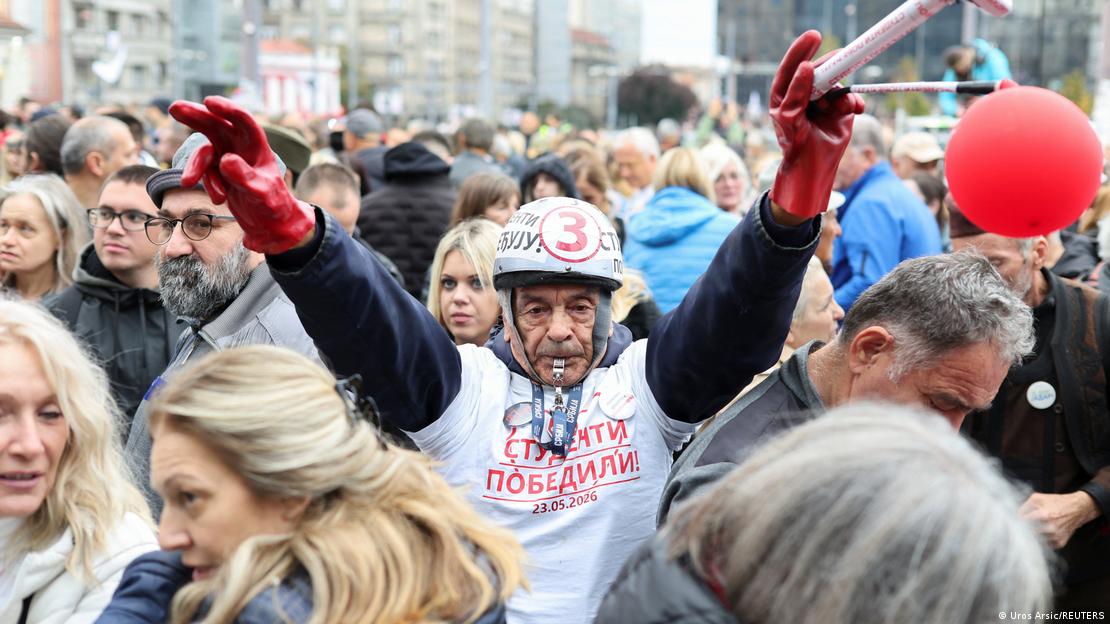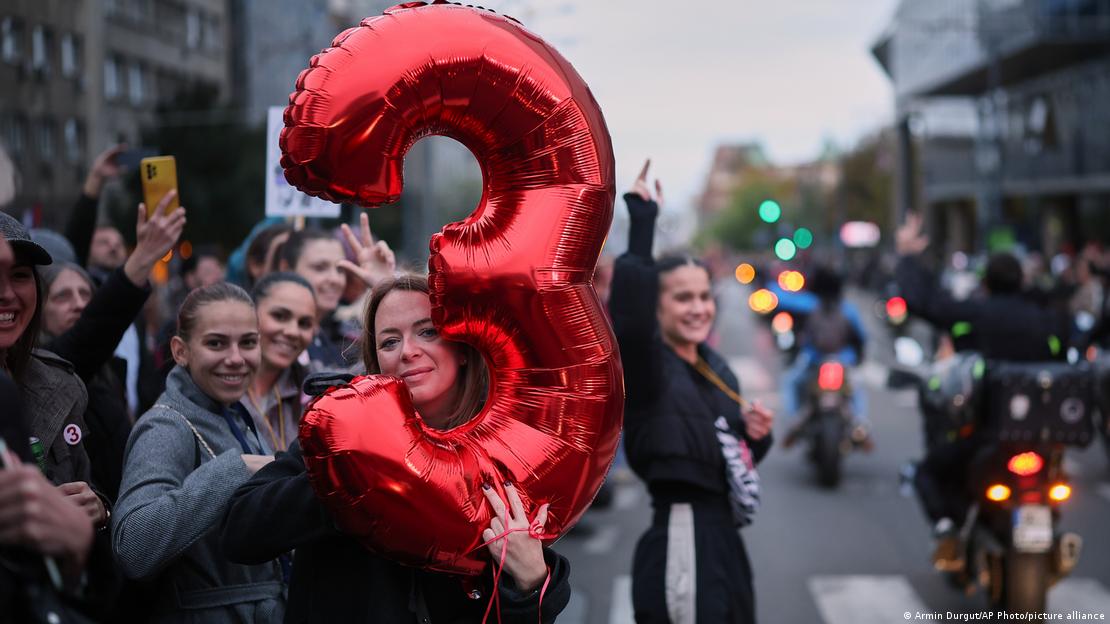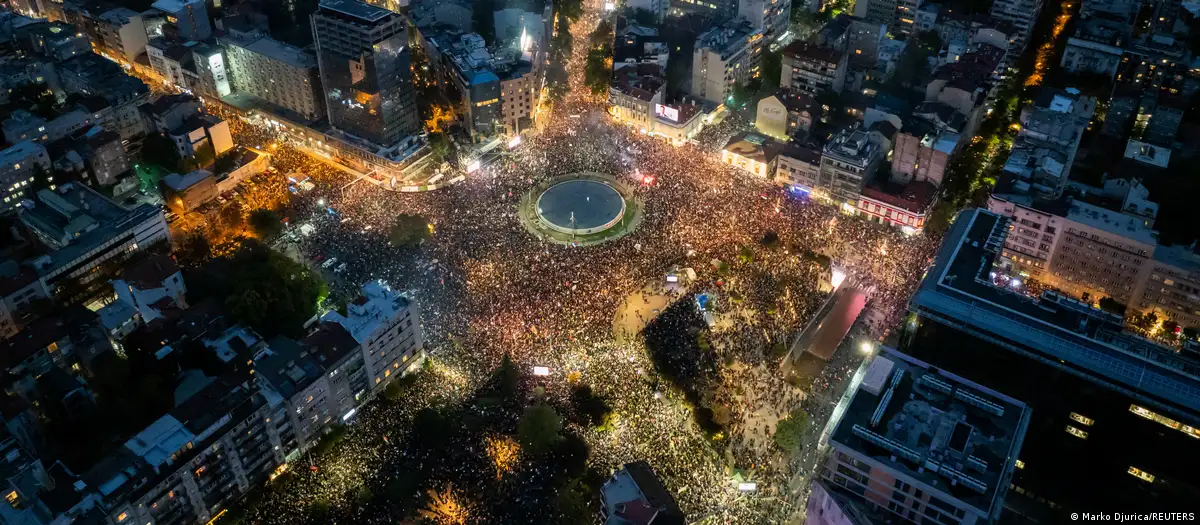
Serbia is approaching Sunday’s parliamentary elections in an atmosphere characterized by popular mobilization, deep polarization and high political tensions. For the first time after 14 years in power, the Serbian Progressive Party (SNS) faces a serious and uncertain competition, led by the “Student List”.
The protests that started 24 months ago – after the tragic collapse of the concrete shelter at the Novi Sad station in November 2024, where 16 people lost their lives – turned into a political movement demanding accountability and the overthrow of the current system.
During the closing rally in Belgrade, student representatives conveyed messages of optimism. Student Arsa Stojanovic told the crowd that “we have walked through Serbia from one end to the other, we have visited villages and neighborhoods, we have looked you in the eye and realized that we can count on you”while candidate Aleksandar Çupiç added that “this smells like freedom”.
On the other hand, the SNS organized its closing rally presenting the vote for power as the only guarantee of stability and sovereignty. Former president Aleksandar Vucic accused the opponents of external influence, stating that “they tried to destroy our country on foreign orders and that is why this is the most difficult battle. They attacked us with billions of euros and we defended ourselves with integrity, our program, love for our homeland and the achievements of Serbia”.
The situation on the ground remains fraught with incidents. The independent election monitoring organization, CRTA, has recorded 116 incidents of physical violence or verbal threats, finding that the campaign “it has been neither free nor fair since day one”due to the inequality in the media space where three quarters of television time is dedicated to the government.
In addition, media reports raise concerns of serious irregularities, including pressure on public sector employees, as well as allegations of vote-buying with amounts ranging from 30 to 150 euros or offers of family vacation packages in exchange for electoral support.