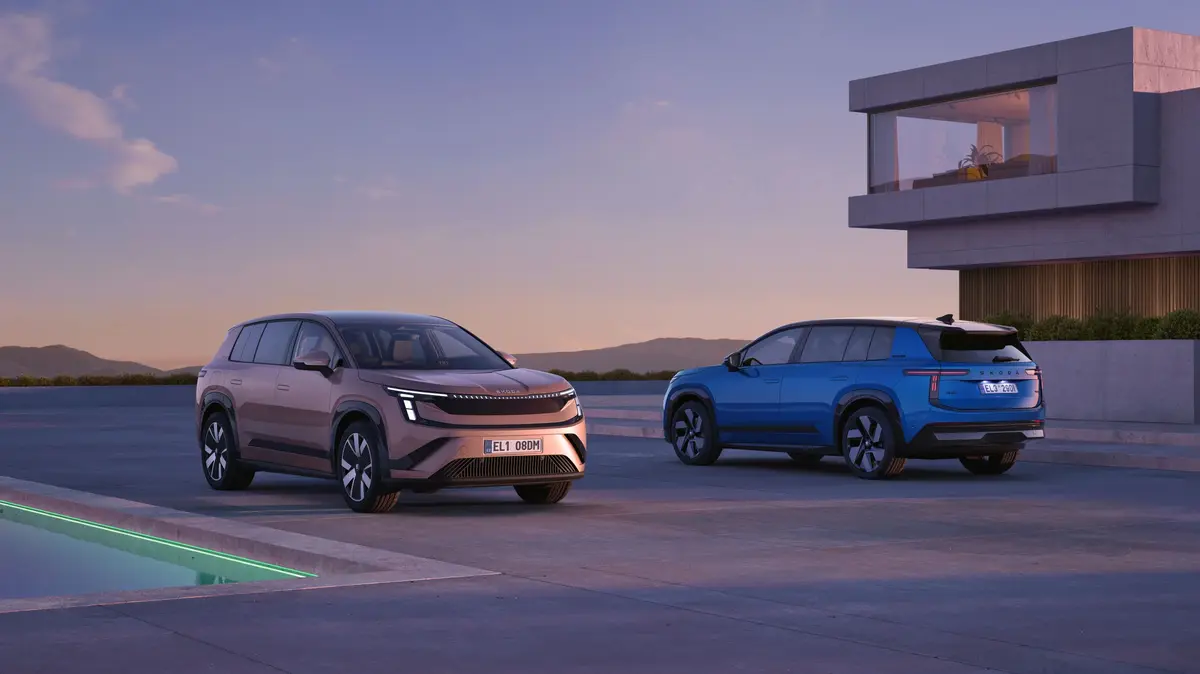
The name Peaq refers to the English term peak, which denotes a peak. It refers to the top position of the model in the Škoda range. The location of the world premiere, the environment of the Rhone Alps on the border of France and Switzerland, corresponded with this.
The Škoda range of electric cars is undergoing a significant change this year. In addition to the technical modernization of the Enyaq and Elroq models, the brand also presents two completely new models. After the recent premiere of the smallest and most affordable Škoda Epiq crossover, the automaker is now presenting its flagship electric model.
Škoda Peaq is based on an improved version of the proven MEB+ electric platform, but with a length of 4876 mm, it is an impressive 116 mm longer than the flagship SUV Škoda Kodiaq. It is thus the largest SUV in the history of Mladá Boleslav and at the same time the largest electric car.
In terms of design, the car is based on the Vision7S studio and works with the new Modern Solid design style. The bow is dominated by the well-known black Tech-Deck Face mask, which is flanked on the sides by lights in the shape of the letter T, also available with Matrix-LED technology using 18 segments.
From the profile, the 19- to 21-inch wheels or recessed door handles, which appear on Škoda models for the first time, are interesting. Retractable cranks help, together with other aerodynamic accessories, to achieve a low aerodynamic resistance value (0.249), but it also offers the possibility of mechanical activation.
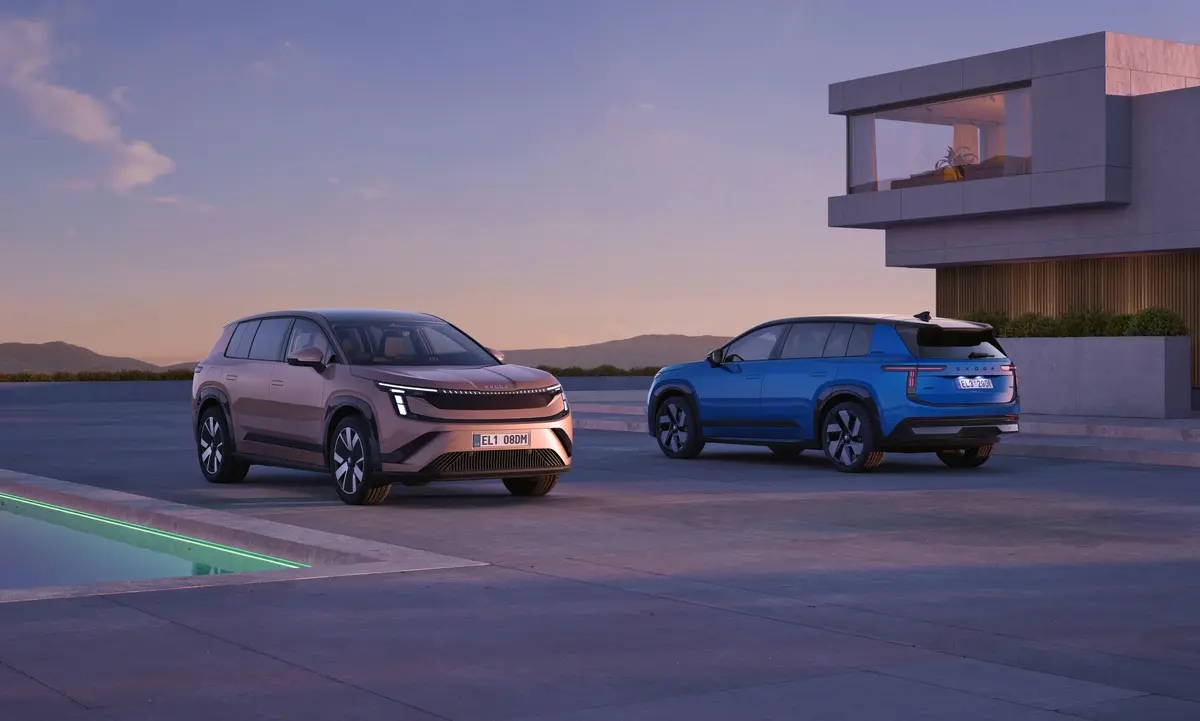
Photo: Škoda Auto
Other interesting features include wipers with integrated washers (for the first time in a Škoda model), an active blind behind the front bumper to improve aerodynamics or the largest glass panoramic roof in Škoda cars with an area of over 2.1 m2.
There are disc brakes on the front axle, and traditionally drum brakes on the rear, as the recuperation of the electric motor is mainly used here to slow down. Optionally, the car offers an adaptive DCC chassis, and some wheel discs can be equipped with aerodynamic covers for better aerodynamics.
The cabin in the front impresses with a new dashboard architecture with a smaller instrument panel display and a large 13.6-inch infotainment screen, which is positioned vertically for the first time. A head-up display projecting information directly onto the windshield is also available as an option.
The infotainment touchscreen runs on the Android platform and offers the main access to the car’s controls, but in addition to that, we see new keys for quick adjustment of the ventilation in the central tunnel. Also new in terms of ergonomics are the handles located in the door handles.
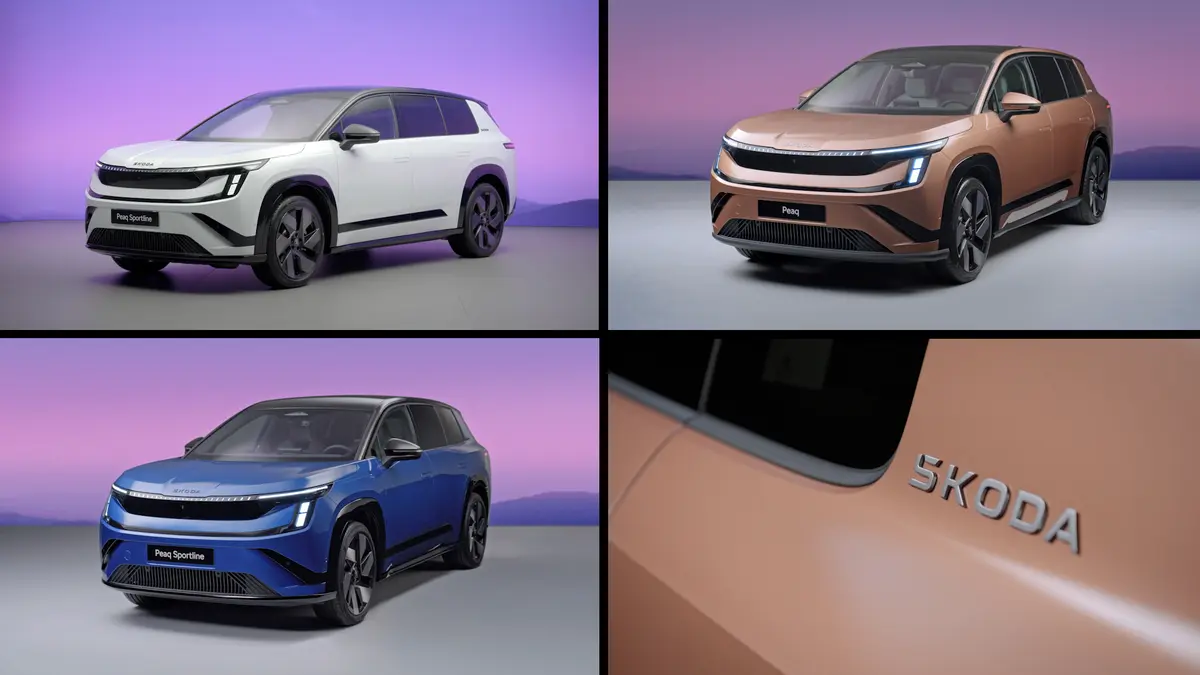
New Škoda PeaqVideo: Too bad
Qi2 magnetic phone chargers with cooling are also an interesting novelty, the car will optionally offer a Sonos audio system with 16 speakers or the Relax package, which includes seats with ergonomic certification, heating and massage. Ambient lighting and the possibility to choose from several types of interior design with different types of upholstery are a matter of course.
However, the main advantage of the cabin should be the space, which thanks to the wheelbase of 2965 mm offers up to seven seats. At the same time, the seven-seat Škoda Peaq still has a trunk with a volume of 299 liters, but in the five-seat version, the trunk volume increases to 935 liters. In addition, the Peaq is equipped with a front trunk with a volume of 37 liters, which can also accommodate a blind from the main trunk, and the interior offers 33 liters of storage space.
Up to 630 kilometers
Peaq will offer two sizes of traction NMC batteries, produced in Mladá Boleslav. The basic one will offer a capacity of 63 kWh (usable 59 kWh), the larger one 91 kWh (usable 86 kWh), which is a new maximum for the brand.
The basic traction battery will be available only in the Peaq 60 version, in combination with an electric motor on the rear axle with a power of 150 kW. The car accelerates from zero to 100 km/h in 8.4 seconds, the maximum speed is 160 km/h and the range is about 450 km. Charging from 10 to 80% should take around 27 minutes.
The version with a larger battery is available in two versions. The basic Peaq 90 is equipped with one electric motor on the rear axle with a power of 210 kW, it can accelerate from zero to 100 km/h in 7.1 seconds, and the range should be around 630 kilometers, which is a new maximum for the brand.
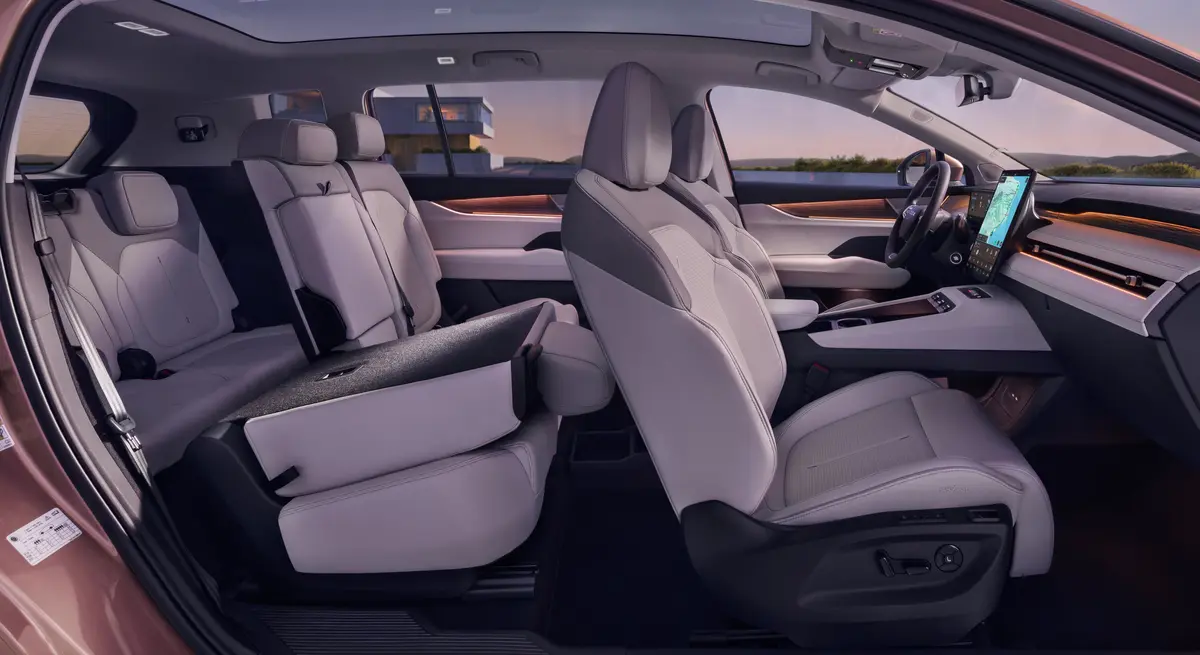
Photo: Škoda Auto
The Peaq 90× version is equipped with two electric motors with a combined output of 220 kW and thus offers all-wheel drive. It can accelerate from zero to 100 km/h in 6.7 seconds and the range is approximately 600 kilometers. Both models with larger batteries promise a maximum speed of 180 km/h, charging from 10 to 80% should then take around 28 minutes.
All versions also offer a towing device with a capacity of 1,800 kg for rear-wheel drive only, or 2,000 kg for all-wheel drive. The car will offer the possibility of control with only one pedal, enhanced recuperation, support for two-way charging (V2L) and for sending energy to the house (V2H) or the network (V2G).
There are disc brakes on the front axle, and traditionally drum brakes on the rear, as the recuperation of the electric motor is mainly used here to slow down. Optionally, the car offers an adaptive DCC chassis, and some wheel discs can be equipped with aerodynamic covers for better aerodynamics.
As the flagship model of the brand, Peaq also brings a wealth of technological and safety equipment. For example, it already offers 10 airbags and a number of safety assistants as standard. Optionally, the Travel Assist 3.0 system is also available, which is now able to respond to traffic lights, as well as support for driving in a queue, emergency assistant and automatic parking.
Still this year
Škoda Peaq will be available in three equipment versions, where the traditional Selection and Exclusive Selection will be complemented by the Sportline version with black painted exterior elements and rich equipment, including sports seats and a sports steering wheel. Production of the car should start during the summer, delivery of the first cars is expected in the fall of this year. The car manufacturer has not yet published the prices.