
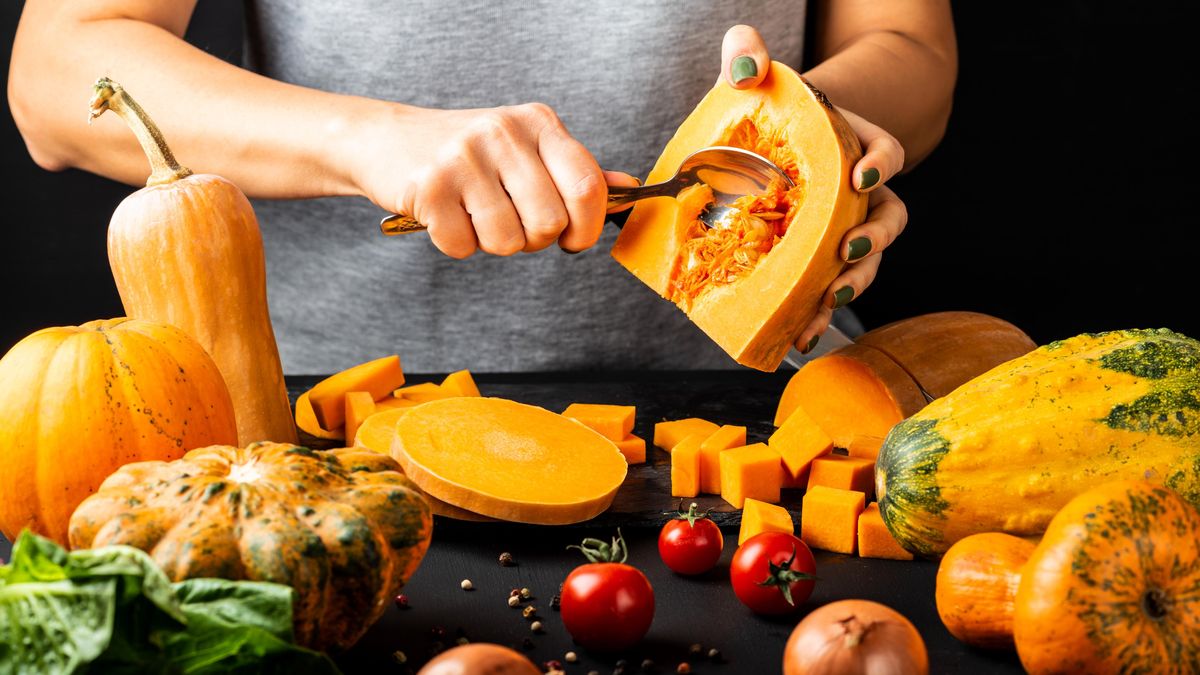
Pumpkin belongs to “superfoods” – it is full of beta-carotene for eyes and immunity, vitamins C and E and minerals such as magnesiumpotassium or zinc. The high content of water and fiber makes it a great choice for a diet menu, for children – it is suitable, for example, for first foods. And pumpkin seeds? They are a treasure full of healthy fats and minerals. It simply pays to know a little about pumpkins and to be able to process them well and tasty.
Which kind of pumpkin to choose?
In stores and markets, you will most often come across a few basic varieties of pumpkins that are suitable for eating:
- hokkaido – it does not need to be peeled, it is suitable for soups, purees and sweet baking
- buttery – delicate taste, ideal for soups, purees and sweet baking
- nutmeg – nutty taste, great for cakes and soups
- spaghetti – after baking, the flesh turns into fibers, popular with low carb meals
- goliath – large-fruited, often weighing tens of kilograms, also suitable for pickling
Are ornamental pumpkins edible?
There are many on the market decorative pumpkinswhich are mainly suitable as decorations. But surely you have also wondered if they are edible. According to the Italian organization Altroconsumo, some decorative pumpkins are not intended for consumption and can cause gastrointestinal problems. They contain toxic bitter substances that can cause digestive problems and vomiting. It is not easy to distinguish an edible species from an inedible one, they can have a similar shape and color. The essential guideline is that edible pumpkin never has a bitter taste. If it has it, then don’t consume it. “In the store, non-edible decorative species should be sold separately from edible ones, for example among Halloween decorations. If they are used to decorate shelves with fruit and vegetables, they should be clearly marked as non-edible decorations. Even when selling seeds and seedlings, it should be clear whether it is an edible or decorative variety,” states the consumer organization dTest.
Photo: Longfin Media, Shutterstock.com
There is a wide variety of pumpkins in stores, but edible pumpkins should not be sold together with ornamental ones.Photo: Longfin Media, Shutterstock.com
How to choose and store pumpkins
A ripe pumpkin has a dry stem and hard skin without soft spots. “With proper storage, i.e. in a dry and cool place with a temperature of around 10 to 15 °C, they can last for several months. But this only applies to undamaged fruits. And it pays to check stored pumpkins regularly,” says Tomáš Louda, fruit and vegetable specialist at the online supermarket Košík. Sliced, it will last a week in the fridge and can also be frozen or canned.
How to use pumpkin in the kitchen
Pumpkin offers many possibilities for processing, be inspired by our best recipes:
Where to get pumpkins?
Pumpkin, the queen of autumn cuisine
Pumpkins are perhaps impossible to avoid. What to cook or bake from them so that the whole family can enjoy them?
