Dzerzhinsky was originally from an impoverished Polish noble family. As a child, he wanted to become a priest, but shortly before graduation, he lost his faith and instead embarked on the path of a socialist revolutionary. After years of working in Poland and Lithuania, in 1917 he met Vladimir Ilyich Lenin. He later became a Bolshevik and one of Lenin’s most loyal aides, writes the Reuters agency.
After the Great October Revolution, he contributed to the building of a revolutionary government by brutally oppressing all enemies and those suspected of hostility to the regime. As head of the secret police in the service of Lenin and then his successor Joseph Stalin, Dzerzhinsky oversaw the intimidation, arrests and executions of political opponents, now collectively known as the Red Terror. He held this position until his death in 1926.
Photo: Profimedia.cz
Felix Dzerzhinsky
For Russian dissidents, Dzerzhinsky is a monster. When the Berlin Wall fell in 1989, a jubilant crowd in Warsaw threw down his statue. After the fall of the Soviet Union two years later, demonstrators in Moscow also removed his statue erected in front of the KGB headquarters on Lubjanské náměstí.
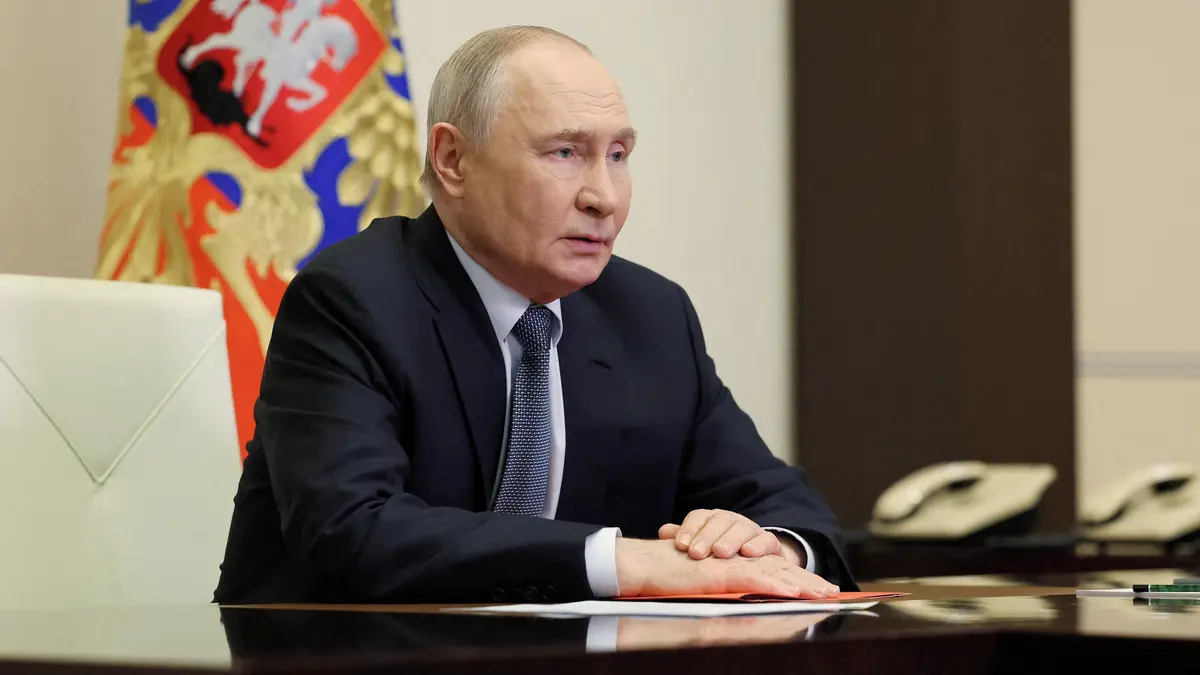
But for Russian spies, of which there are many in the leadership of Putin’s Russia, Dzerzhinsky is a hero. Putin himself is a former lieutenant colonel of the KGB, and when he started studying at the KGB college in 1979, he bore the name of Felix Dzerzhinsky, which remained with him until 1993. A number of Russian spies also call themselves Chekis, based on Dzerzhinsky’s original abbreviation of the secret police.
The FSB Academy is not a successor to the KGB College, it is rather the same institution under a different name. The renaming of the school ordered by Putin to the FE Dzerzhinsky Academy of the Federal Security Service only underlines the continuity between the Soviet regime and contemporary Russia. His decision comes at a time when, due to the war with Ukraine, the Kremlin has consolidated the oppression of the Russian population and reversed the country’s post-Soviet drift towards the West.
Many in Russia now hope that after the renaming of the FSB academy, Dzerzhinsky’s statue could soon return to Lubyanské náměstí. “After the return of Dzerzhinsky to the FSB Academy, many really expect the return of the statue of Felix Edmundovič to its rightful place on Lubyanské Square,” said Igor Korotchenko, editor-in-chief of the Russian magazine National Defense.