European right-wing populists distanced themselves from the American president even before Hungarian Prime Minister Viktor Orbán suffered a crushing defeat in Sunday’s parliamentary elections. Trump, who repeatedly expressed his support for Orbán, even sent his vice president JD Vance to help him. In vain.
Orbán’s defeat combined with the consequences of the war with Iran and Trump’s dispute with Pope Leo XIV. according to the server Politico, it accelerated the retreat of right-wing populists.
“In the context of the elections, this is not a particularly advantageous alliance,” said Torben Braga, a lawmaker from the far-right Alternative for Germany (AfD) party who sits on the foreign policy committee of the German Bundestag, regarding Trump and his pre-election support.
For Italian Prime Minister Giorgia Meloniova, Trump’s attacks on the Pope were a turning point. But she simply had to take the side of the Holy Father, among other things because of the Catholic base of her voters. The fact that literally all of Europe blames the American president for the conflict in the Middle East and rising energy prices also played its part.
Hungarians did not like Trump’s favor
“Orbán’s defeat cannot be attributed only to voter fatigue,” said one of the prominent representatives of the ultra-right National Association. “Hungarian voters did not like the alliance with the USA in the current context,” he confided under the condition of anonymity.
According to him, in order for the National Association to be in the best possible position before the upcoming French presidential elections, it will probably have to avoid being perceived by voters as close to the Trump administration.
Beyond the Rhine, legislators from the “alternative” are taking a similar approach, as key regional elections are approaching in September.
AfD lawmaker Matthias Moosdorf said the “flamboyant displays of friendship” between Budapest and the Trump administration “ended up hanging around Orbán’s neck like a millstone.”
At the same time, the AfD initially saw Trump’s support as an opportunity to boost legitimacy and increase pressure on Chancellor Friedrich Merz’s conservatives to get rid of Germany’s “firewall,” an informal barrier that has existed since the end of World War II to prevent the far right from governing.

Ties to Washington can be a burden
Close ties with Washington “can be a burden and can be misinterpreted”, repeated one of Le Pen’s close allies. “We like our friends in Washington, but we don’t want them telling us what to do.”
However, many things remain from Orbán’s legacy that are worth repeating to the European far right. The outgoing Hungarian prime minister provided the template for a populist agenda in Europe. This includes, for example, a confrontational attitude towards EU institutions and attacks on the rule of law and the media. Many nationalist parties in the EU have adopted this tactic at home as well.
Le Pen’s supporters are convinced that Orbán’s defeat will not mean the end of the fight against the European Commission.
“We need a big country to lead the revolt,” one of them said on condition of anonymity. “If we win in 2027 (in France), other countries will follow.”
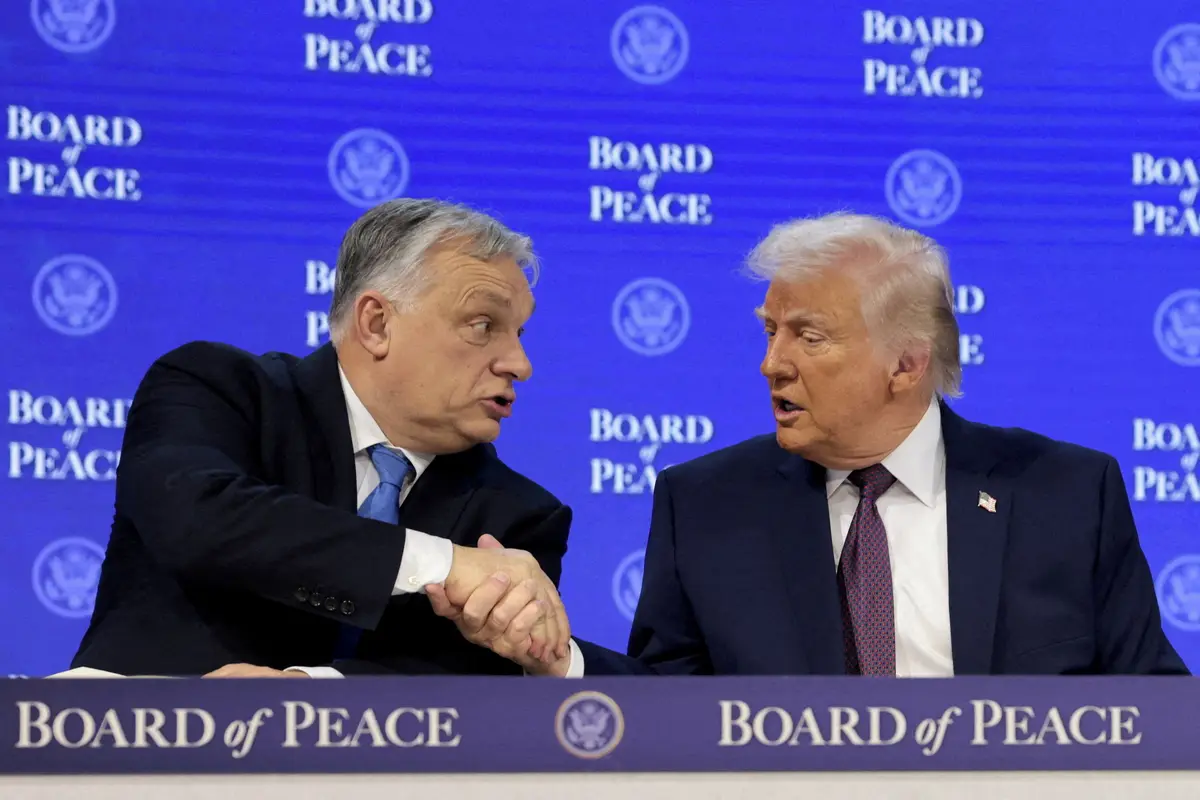
Photo: Jonathan Ernst, Reuters
Viktor Orbán and Donald Trump