
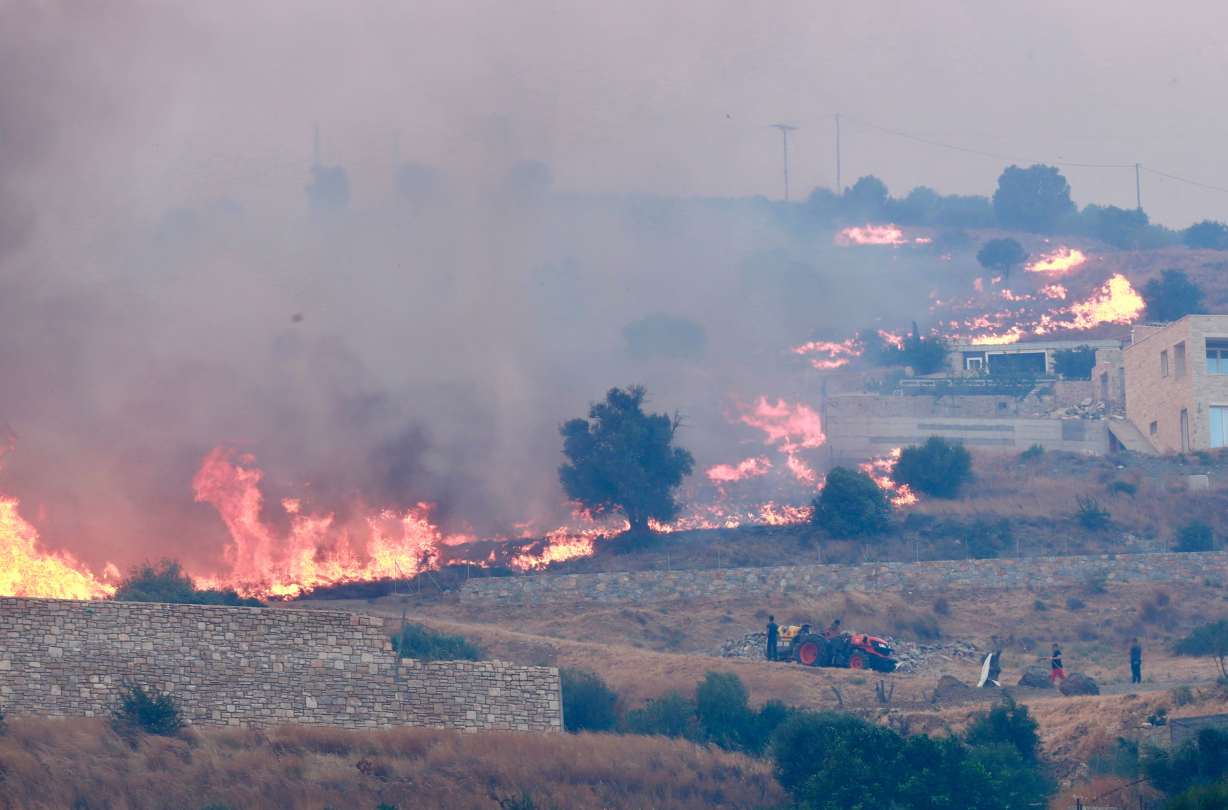
Tragedy has struck Greece, where three firefighters lost their lives while fighting the flames on the island of Crete and in the south of the country.
The Greek authorities have described them as “heroes” who fell in the line of duty, while their colleagues continue the difficult fight with the fires fueled by the heat wave and strong winds.
In Crete, the remains of fire engines and burnt forests bear witness to the magnitude of the disaster. On the mainland, evacuations have saved lives, but many families have returned to find their homes destroyed.
In Spain, Prime Minister Pedro Sánchez warned that the country is facing for the first time a fire classified at “operational level 3”, where the national government takes over the response. “The next 12 hours will be decisive,” he said, stressing the importance of the national civil defense system.
In Madrid, firefighters managed to technically stabilize the biggest fire ever recorded in Spain, while near Valencia the flames remain out of control. In France, more than 120 firefighters have been injured and the area burned has reached 42,000 hectares, a historical record.
According to EU data, over 330,000 people have been forced to leave their homes and hotels in southern Europe. Some of them have returned to find only ruins. “This place has become a total ruin,” said a 74-year-old pensioner in Madrid after seeing his home destroyed.
The President of the European Commission, Ursula von der Leyen, thanked the firefighters for their “courage and commitment”, stressing that European solidarity knows no borders.
Romania, Greece and Poland have sent aid, while planes and helicopters from Sweden, Turkey, Italy and Portugal have been mobilized to help put out the flames.
Experts warn that the fire season is becoming longer and more dangerous, with the possibility that the flames will continue until November.
Global warming has made the extreme drought that has engulfed Western Europe five times more likely, turning the continent into a hotbed for wildfires.
So far, heat waves have claimed over 10,000 lives and caused huge economic losses to farmers.
