
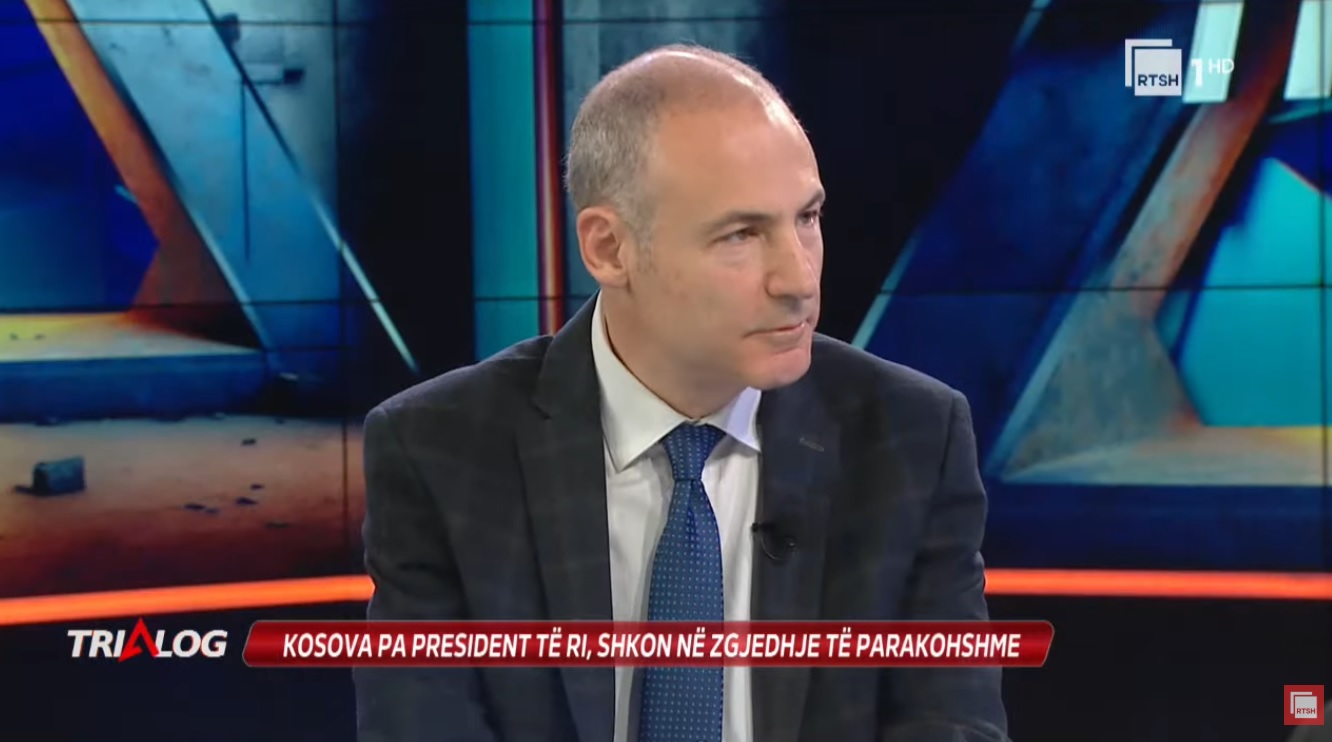
According to Bumçi, Kosovo has managed to build functional institutions, free elections and an independent media, creating a political pluralism that imposes cooperation between actors. He emphasized that this development makes Tirana and Belgrade seem still underdeveloped in terms of democracy.
“Kosovo has given an extraordinary example of a democratic political maturity in these years, which makes Tirana and Belgrade look like primitive countries, regimes like ours. With free elections that are the merit of all governments because Mr. Kurti was in the opposition when he won the elections. It is the merit of a political class that has reached this maturity, with institutional balance, with a functioning Constitutional Court, with independent media that are critical of the government. With an electoral maturity that has created a plurality. In Kosovo, due to many reasons, we have a political scheme that has several actors. There are 4 Albanian parties and the 20 seats are creating a plural political scheme that also imposes agreements”, said Bumçi.
Focusing on the role of Albin Kurti, Bumçi said that his political approach has been stable both in the opposition and in the government, following clear actions without creating broad alliances, except for a short collaboration with the LDK.
“The change also comes partly from the approach of Mr. Kurti, who in the opposition but also in the government has followed an approach rightly within the legitimate political game where he decides an action and stands strong for that action without building bridges except for a short time with LDK, a very short co-governance. The moment that Kosovo spends a year and a half without proper governance for any country, this would be a moment to stop”, he said.
He underlined that the long period without a stable government in Kosovo constitutes a serious challenge, adding that the responsibility towards the voters requires maximum efforts to ensure institutional stability.
“There are two moments, do the elections produce a result that is accepted and represents the will of the citizens in Kosovo, not in Albania and Serbia. It requires that you have prudence for consensus, and Kosovo is shown with a coalition government. When you have a year and a half with this situation, you have an increased responsibility that comes from the votes given to you by the citizens, and when you have this responsibility you must do everything to make governance possible”, emphasized Bumçi.
