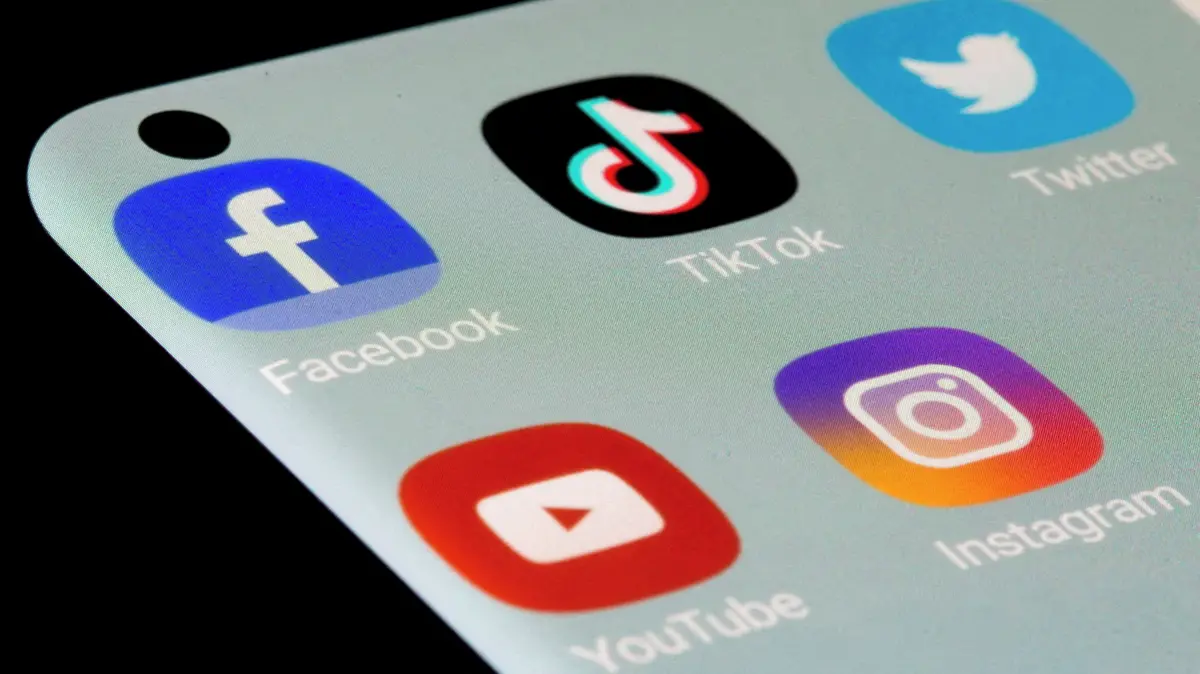
The Starmer government has announced sweeping changes to strengthen the safety of children online. Newly, persons under the age of 16 should not be able to create accounts on platforms enabling communication between users, broadcast live or establish contact with people they do not know.
Stricter rules should also affect some artificial intelligence tools. Chatbots simulating romantic or sexual relationships will now have to require a minimum age of 18.
According to The Independent, the government is also considering other measures for minors under 18 years of age. The game includes, for example, nighttime restrictions on the use of social networks or breaks during endless scrolling of content.
Hasty solution?
The children’s organization NSPCC described the planned ban as “a victory for children and parents”. But not everyone shares the same enthusiasm.
Among the most vocal critics is Ian Russell, whose fourteen-year-old daughter Molly committed suicide after watching harmful content on the Internet. According to him, the government deals with the consequences, not the cause of the problem.
“We should ban algorithms that recommend malicious content. They are still active and still doing the same thing,” he said.
He admitted that social networks can be not only a risk for young people, but also a benefit. Nevertheless, he feels that the announced plan was created too hastily. “I can’t help feeling that this is just a hasty solution,” he said.
Young people find their way to the Internet
Reservations are also heard from among the ruling Labor Party. Member of Parliament Josh Dean, who at 26 is one of the youngest members of parliament, points out that the young generation grew up in a completely different world than most of today’s politicians.
“The vast majority of deputies have experienced the world with and without social networks. They remember the time before their existence. Today’s young people do not have this advantage,” he said.
According to him, it cannot be expected that the ban will simply change the behavior of an entire generation. On the contrary, he fears that young people will find other paths.
“We know for sure that young people will find their way to the Internet. I am therefore concerned that the result will be their movement to less secure platforms, where threats can reach them even more easily.”
Concerns about LGBT+
Dean also pointed out another possible consequence. For some young people, social networks represent an important source of support and contact with like-minded people.
“It is too often forgotten in this debate that social networks are not exclusively harmful to young people,” he said. According to him, they can help in building supportive communities and in finding one’s own identity.
He is most concerned about young people from marginalized groups, including the LGBT+ community (people with a minority sexual orientation or gender identity), who could lose an important space for communication and mutual support.
Dispute over the right to vote
Criticism also appeared from the organization Full Fact, which is dedicated to verifying facts. She drew attention to the contradiction between the ban on social networks and the government’s plan to extend the right to vote to sixteen-year-olds.
“If the government is serious about engaging 16- and 17-year-olds in the democratic process, limiting their access to these platforms probably won’t help them become more informed citizens,” said the organization’s head of public affairs, Mark Frankel.
According to him, the ban does not solve the main shortcomings of the current legislation regarding Internet security and, on the contrary, provides social networks with a “free ticket”.
Darker corners of the Internet
The Scottish Commissioner for Children’s Rights, Nicola Killean, is also skeptical. She warned of a “real risk” that the ban would push young people into the “darker places of the Internet”.
In addition, according to her, there is no evidence that banning social networks alone will actually ensure greater safety for children online.
The English commissioner for children, Rachel de Souza, made a similar statement. She called the plan a positive step, but at the same time called for a change in approach.
According to her, the debate should shift “from banning children to banning companies that cannot prove that their services protect the safety and mental well-being of children.”
Even the technology companies themselves have reservations. Meta, which owns Facebook and Instagram, warned that the ban could push children into unregulated parts of the internet. At the same time, however, she stated that she would cooperate with the British government and regulator Ofcom on the introduction of new rules.
The discussion about how to protect children in the digital world is far from over in Britain. While the government is betting on a ban, its critics claim that the real problem lies elsewhere – in the very functioning of social networks and the algorithms that determine what young users see on screens.
How do technological giants verify the age of children on social networks?
At a time when most adults spend hours a day on social networks, there is a growing debate about how much free access children should have to the online world. In the Czech Republic, the topic came to the fore again after Prime Minister Andrej Babiš announced that the government could propose a ban on social networks for children under the age of 15 this year, similar to France or Australia. Social networks already have a number of sophisticated methods to verify the age of users. They also use artificial intelligence for this.