
The streets of Belgrade were filled with cheers, flags and celebrations as Serbian President Aleksandar Vucic conceded defeat to the student-led movement. After nearly two years of anti-government protests, thousands of citizens took to the streets to celebrate what they consider a historic turning point for the country.
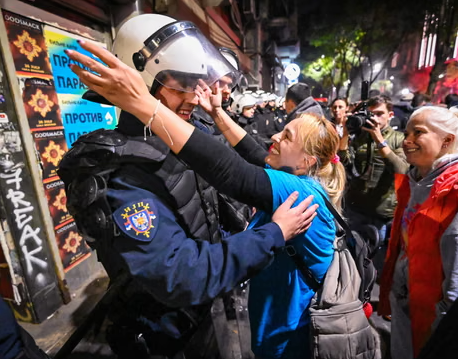
Cars honking, people hugging and citizens greeting police officers marked the festive atmosphere in the Serbian capital. For many protesters, the moment had a special meaning, since they were celebrating in the very streets where they had previously faced police interventions.
“It is very strange that in the same streets where the police used to beat us, in the streets where we have retreated many times in front of the gendarmerie, now we are standing as winners”, said Sara, 24 years old, describing the change that the student movement has experienced.
According to preliminary results cited by Vučić, the Student List may have secured between 135 and 140 seats in the 250-member parliament, while the right-wing Serbian Progressive Party (SNS) around 105 seats.
The news of the possible defeat of the ruling party also brought out thousands of citizens in Novi Sad, the city where protests began in November 2024, after the deadly collapse of the roof of a railway station.
In Belgrade, tens of thousands of people filled the main boulevards, waving flags, lighting bonfires and cheering for change. “Oh God, I don’t know how to explain it. I’m very happy and excited,” said Tamara, 35 years old.
She described the result as a step towards “freedom and hope for a better tomorrow”, but admitted that the road ahead will be difficult. “I know we have a difficult period ahead, I know. But, despite this, it is a great relief and gives us energy to continue,” she said.
The challenges of the new movement
The task of curbing authoritarian tendencies and fighting entrenched corruption in the country falls to the list of 250 candidates. Over 160 of them have doctorate titles, while the list also includes farmers, athletes and representatives of other professions.
However, the challenges are many. The student program has not taken a definitive stance on some of the most controversial issues in Serbia. The future of membership in the European Union is left to be decided through the referendum, while Kosovo continues to be claimed as an integral part of Serbia.
Despite questions about the future, many citizens celebrated what they see as the end of a government accused of constantly threatening critics and restricting media freedom.
“The people have won! The people defeated the dictator! The people will rule Serbia!”, Nebojsha Cosic told Reuters, while the citizens held hands and danced the traditional Serbian dance, Kolo.
Celebrants also turned to Belgrade’s central park, where Vučić’s loyal supporters had set up a camp for more than a year. Citizens enthusiastically removed the fences and tents that had blocked the entrance to the park.
For Duško Suvajac, 52, the result has a significance that goes beyond the borders of Serbia, at a time when decisive elections are taking place in several countries, where the forces of the authoritarian right and those who are pro-democracy face off.
“This is a symbol for Europe and the world. It is a demonstration of how freedom can defeat evil,” he said.
As he spoke, people around him hugged, kissed, cried and shouted for joy. For many, this was a special moment to reclaim the streets where student calls for change had been met with police, rubber batons, tear gas and even the alleged use of a sonic device to disperse crowds.
“It’s just the moment when our dream comes true,” Sara said. “We will remember this moment for the rest of our lives.”
