
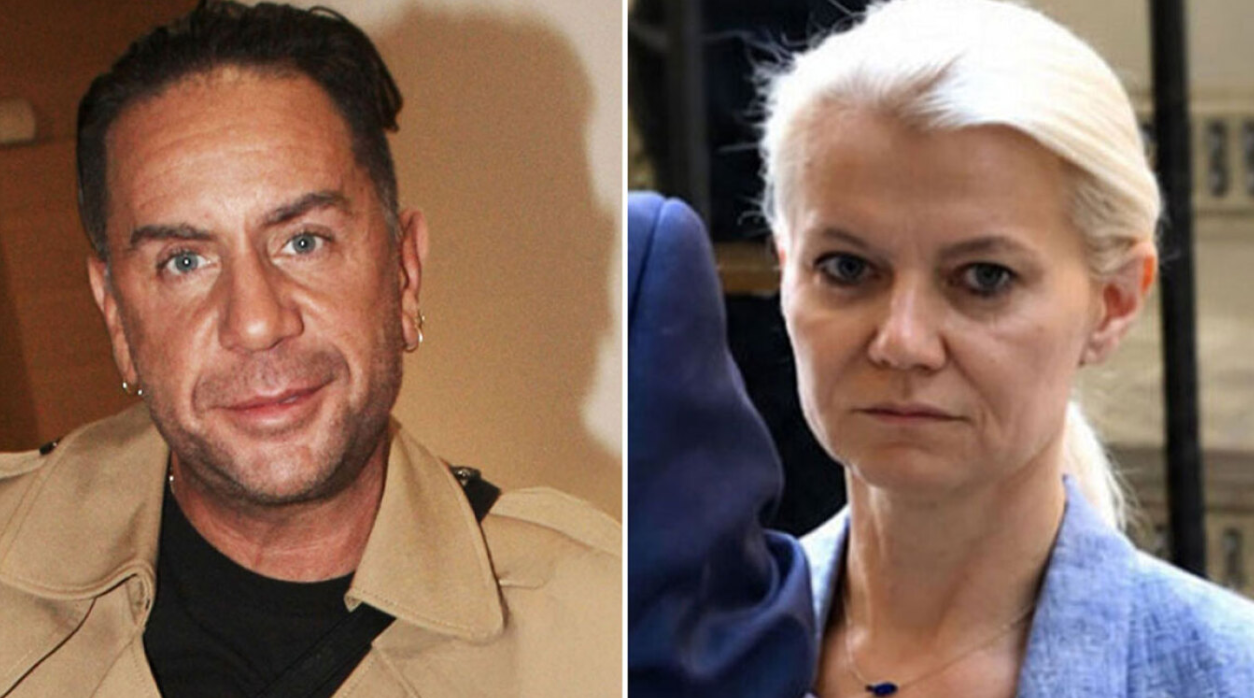
The investigation into the death of Greek singer Giorgos Mazonakis is taking on new dimensions as police have focused on the digital elements collected, particularly on one of the two photographs that doctor Ioanna Gaka took of Mazonakis and sent to an unknown recipient.
The accused in the death of Mazonakis had taken a total of two photographs and one video.
He deleted all these files before going to the Kypseli police station in the afternoon of the same day to give evidence.
The first photo was taken at 14:43:36 on September 9. The file was created at 14:44:19 and deleted at 19:09:09.
According to the information, in one of the two photographs, Mazonakis appears lying on the bed of the clinic, while the machine was in operation.
He wears a short-sleeved yellow T-shirt, is covered from the waist down with a blanket, and has his head turned to the right with his eyes closed.
Intravenous catheters can be seen on the right hand, while a similar connection can be seen on the left.
This photo also contains geolocation data. The coordinates found in the metadata correspond, according to the DEE investigation, to a point on Karneadou Street in Athens – the location of the clinic. It is for this photograph that experts have discovered digital traces of distribution.
This means that Gaka sent the file to an unknown recipient, who cannot be identified without removing the phone secret. According to the information so far, it is not considered certain that the photo was sent to Ilias Theodoropoulos.
The second photo was taken at 14:45:22 and created as a file four seconds later, at 14:45:26. It was also found deleted. According to the records, that was when Mazonakis started plasmapheresis.
The time of deletion was 19:09:13 – just four seconds after the first photo was deleted. This photo also had the same coordinates that lead to Karneadou street.
A deleted video file was also found on the same device. The metadata shows that the video was created at 14:43:55 – between the two pictures. It was also deleted at 19:09:13. What the phone hack will show The phone hack is now considered critical to this part of the investigation. Investigators expect the recovered data to reveal the exact recipient of the photo, the app through which it was shared, whether there were accompanying messages, and whether the photo was forwarded.
The identity of the recipient may give a new direction to the investigation, especially if it relates to what was going on in the clinic at the time.
The opening and in-depth examination of the mobile phones of three clinic employees is also of great importance.
Authorities are looking for communications, messages, calls, photos, videos and any digital traces that can help reconstruct the events.
Of particular interest is whether there were communications with the two doctors in the critical hours and whether the same or other audiovisual material was disseminated after the incident.
Checking the phones can also serve as a means of verifying the findings from Ioanna Gaka’s phone and the clinic’s computer.
At the same time, authorities are increasingly looking into the possibility that Mazonakis was administered a substance before or during the plasmapheresis.
So far, no specific drug or substance has been identified, while critical responses are awaited from toxicology analyses.
If the use of a substance of the category being investigated is confirmed, its administration should be done under certain medical conditions and with the presence of a cardiologist and an anesthesiologist.
The testimony of the accused doctor Ioanna Gaka
The doctor Ioanna Gaka, who together with her husband Ilias Theodoropoulos is at the center of the investigation into the death of the singer Giorgos Mazonakis, stayed for about 8 hours in the investigator’s office.
Immediately after the end of the testimony, the investigator and the prosecutor will decide whether to proceed with detention or not.
Both accused face charges of first degree murder – a crime that carries a life sentence if convicted.
During her testimony, the doctor – who has been at the center of the file since the first stages of the investigation, as she was the one who had undertaken the certain “therapy” – is said to have completely rejected the accusation, denying that there was any illegal action on her part.
The investigator paid special attention to the 49-minute interval that intervened from the first sign of alarm to the call of the emergency service.
This moment is under the scrutiny of the authorities, as the file includes digital data documenting the operation of the plasmapheresis machine and, among other things, the time when the first alarm was recorded.
The accused is said to have insisted that she acted according to the law and took all the prescribed measures.
Moreover, she rejected the charges and emphasized that the Karneadou Street clinic was operating completely legally.
