
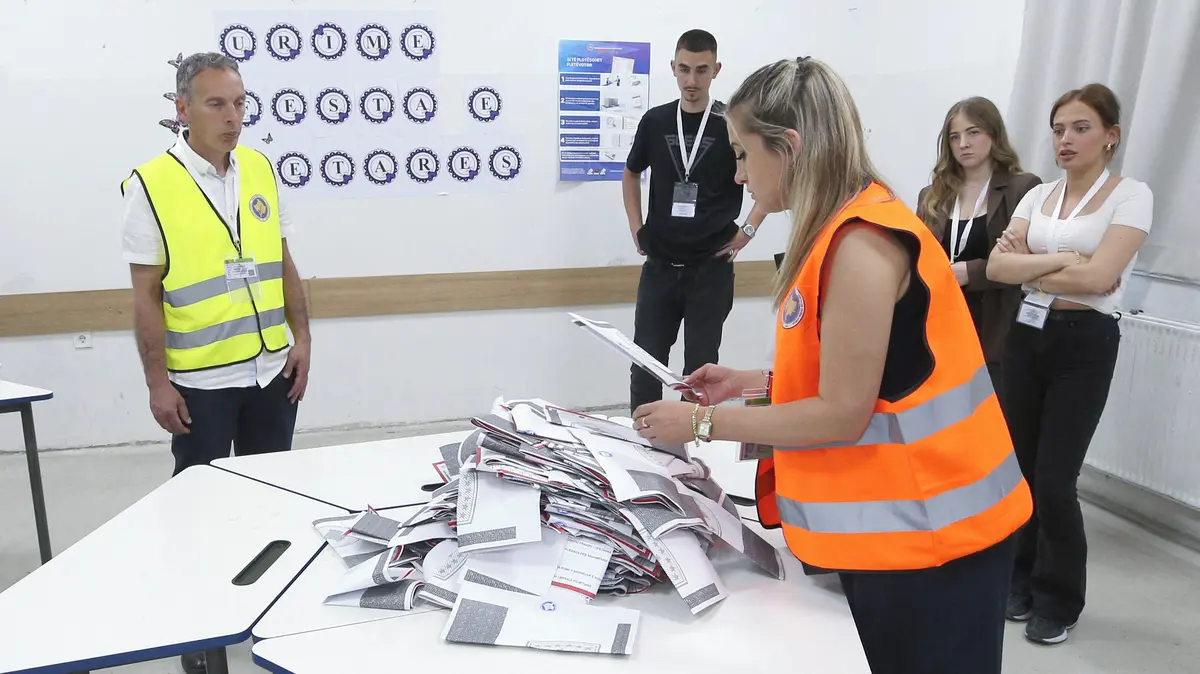
The opposition Democratic Party of Kosovo (PDK) finished second with 21.35 percent. According to information from the Central Election Commission, approximately 36.88 percent of voters went to the polls.
Parliamentary elections were held in Kosovo for the third time in less than two years. After the first inconclusive elections last February, Kosovo was without a functioning government for most of the year, which resulted in second elections in December. Today’s elections are being held because the main political parties could not agree on who should replace the former president Vjosa Osmaniová by the March deadline.
Kurti’s party has a majority in the 120-member parliament since the December elections, but the Kosovo president is elected by at least 80 deputies, which requires a broader political consensus, which was not achieved in the parliament.
In the December elections, the voter turnout was over 45 percent. Of the main parties, the LVV won 49.3 percent of all votes and occupied 57 seats. The two largest opposition parties, the PDK and the Democratic League of Kosovo (LDK), won 22 and 15 mandates, respectively. Analysts interviewed by AP do not expect significant changes after today’s elections, the third in the last 16 months.
