
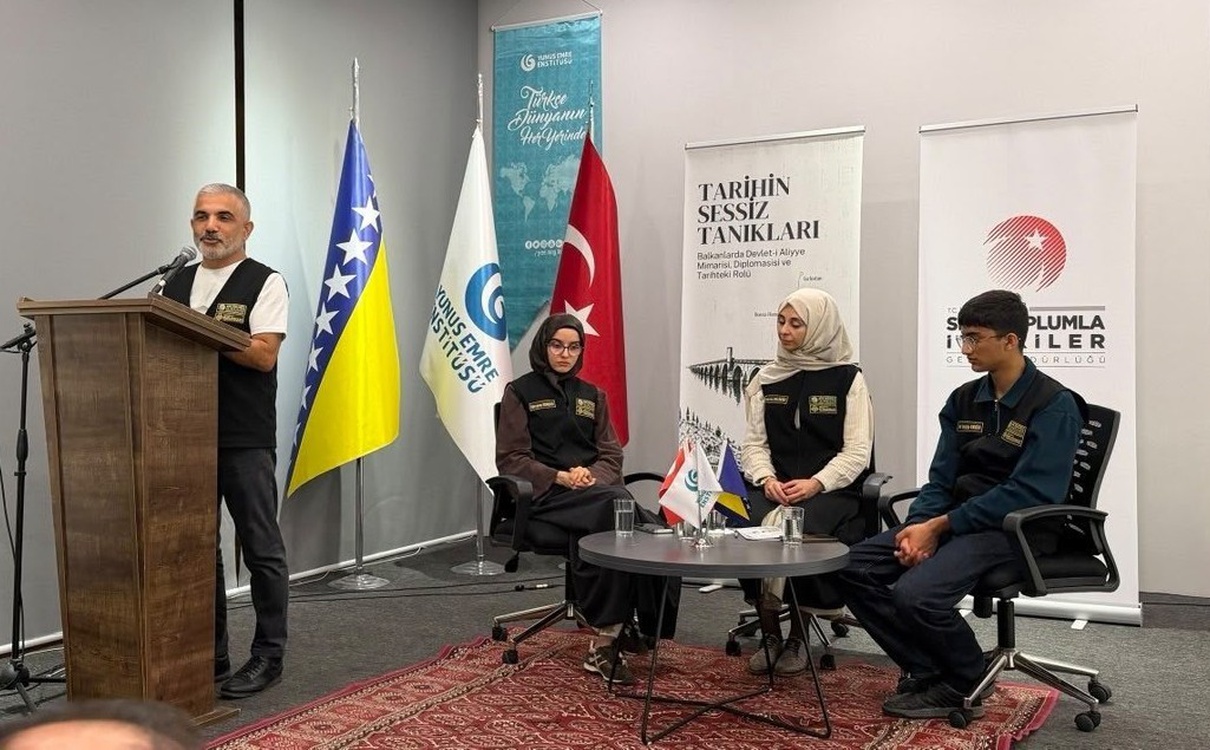
The field leg of the project “Silent Witnesses of History: The Architecture, Diplomacy and Role of the Supreme State in the Balkans”, organized by Erzurum Metropolitan Municipality and Erzurum Diplomatic Research Center Association (EDAM), supported by the General Directorate of Civil Society Relations of the Ministry of Internal Affairs, has been successfully completed.
An 11-month intensive work schedule was carried out within the scope of the project, which was implemented to hear the silent scream of the Ottoman architectural heritage and written culture, which were destroyed due to wars and political transformations in the past centuries, to revive the common cultural memory and to reveal the diplomatic infrastructure of the justice and peace model called Pax Ottomanica (Ottoman Peace).
After meticulously examining the edicts, covenants and cadastral records in the Presidential State Archives, comprehensive field research was carried out in Bosnia-Herzegovina, Kosovo, North Macedonia, Montenegro, Albania and Serbia between 14-22 October 2026. Within the scope of field studies, official visits were organized to the Turkish Embassy in Sarajevo and the Turkish Embassy in Belgrade and the details of the project were conveyed.
During the research, a total of 13 historical artifacts, including the Bayraklı Mosque, Blagaj Lodge, Halveti Lodge, Sokullu Mehmet Pasha Bridge, Mostar Bridge, Murad I Hudavendigar Tomb, Alaca Mosque, Morica Inn, Arasta Mosque Minaret, Stari Bar Clock Tower, Poitelj Castle and Poitelj Village, and Gazi Hüsrev Bey Library and Madrasa, were in focus. inventory and documentation studies have been completed.
Additionally, on October 19, the anniversary of Aliya Izetbegovic’s death, an international panel was held in Bosnia-Herzegovina, hosted by Yunus Emre Institute Sarajevo Representation. All data, photographs and interviews obtained during the field and archive processes have been classified with scientific methods, and documentary film scripts and academic publications that will convey the architectural, diplomatic and cultural heritage of the Ottoman Empire in the region to large audiences will be made available to the public and the scientific world.
