
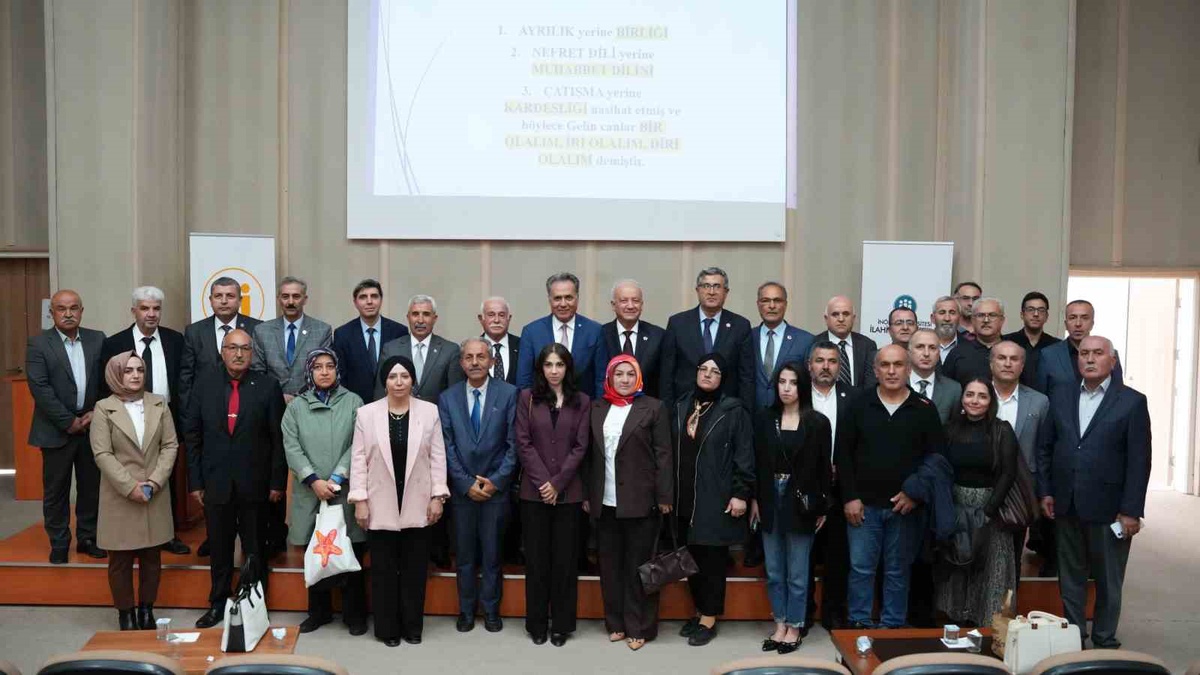
The historical development of Alevi lodges and the wisdom tradition of the Turks were discussed at the conference titled “The Wisdom March of the Turks: The Birth and Development of Alevi Hearths from Khorasan to the Balkans”, organized by İnönü University Alevism Research Institute and Alevism Research Student Community.
Faculty of Theology Prof. Dr. At the conference held at Zahit Aksu Conference Hall, Munzur University Founding Rector and BBP Deputy Chairman Prof. Dr. Durmuş Boztuğ took part as a speaker.
To the conference; İnönü University Rector Prof. Dr. Nusret Akpolat, Vice Rector Prof. Dr. Mehmet Sağlam, Dean of the Faculty of Theology, Prof. Dr. Mehmet Kubat, İnönü University Alevism Research Institute Director Assoc. Dr. Yakup Yıldız, Cem Foundation Malatya Branch President Eşref Doğan, Zeynel Abidin Foundation President Ergün Tuluk, political party representatives and students attended. In his speech, Boztuğ talked about the Turkish-Islamic Sufism tradition, which was shaped under the leadership of Hoca Ahmet Yesevi and Hacı Bektaş Veli, and the “four doors and forty positions” approach systematized in this context.
Boztuğ stated that the wisdom march of the Ahl al-Bayt generation, extending to Anatolia and the Balkans through Turkestan and Khorasan, paved the way for the birth of the Alevi hearths, and emphasized that Hacı Bektaş Veli instilled unity, love and brotherhood in the society during the turmoil periods caused by the Mongol and Crusader invasions, and that the Turkish-Islamic presence in Anatolia and the Balkans was built not by the force of the sword, but by conquering hearts.
Drawing attention to the unifying power of the Turkish wisdom tradition, Boztuğ made the following statements:
“Hünkar Hacı Bektaş Veli gave three great advices in the turbulent environment where the Mongol attacks from the east and the Crusaders from the west took place: He advised unity instead of separation, the language of love instead of the language of hatred, and the feelings of brotherhood instead of conflict. Our ancestors won the hearts and minds of people without shedding a drop of blood in this march from Khorasan to the Balkans, and acted with love, justice and sharing. These three advices are the basis of our unity and solidarity today, after eight centuries. “It continues to be the strongest guarantee of our brotherhood.”
Referring to the role of the Khorasan saints who came to Anatolia in guidance and settlement activities, Boztuğ reminded Hacı Bektaş Veli’s understanding of “looking at 72 nations with one eye”. Pointing to the understanding of tolerance of the influential saints in the Balkans through the examples of Sarı Saltuk Sultan and Akyazılı Baba Sultan, Boztuğ emphasized the importance of this historical heritage in terms of social unity. The program ended with a souvenir photo taken after the question-answer session.
