
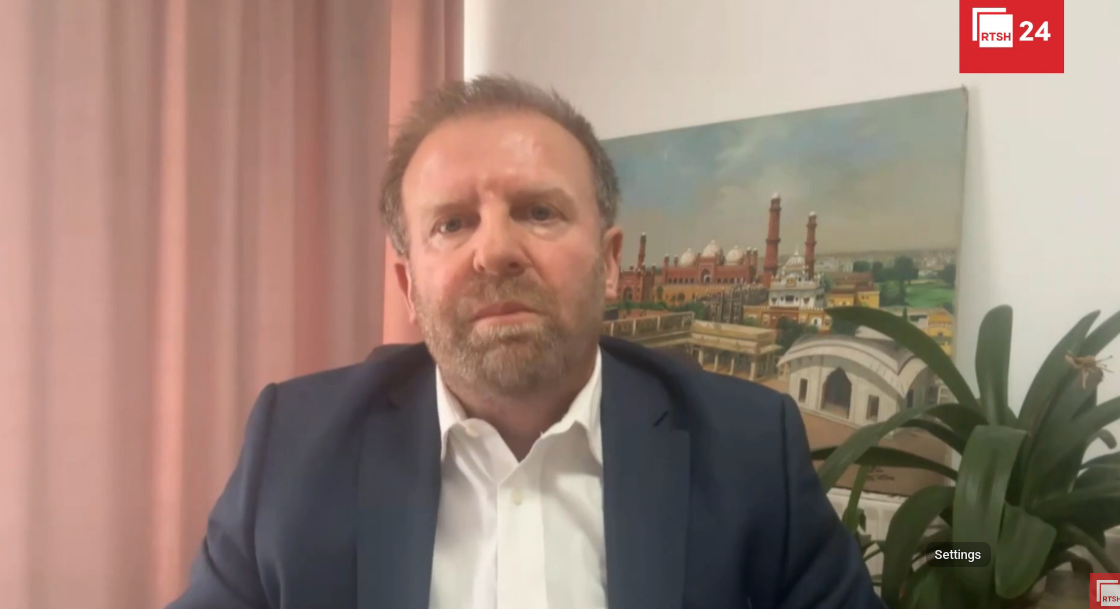
“I am the fourth generation that has experienced on our skin the systematic violence and the clear strategy of Serbia for the execution and extermination of Albanians,” Abazi said.
He stated that “I am the fourth generation that has experienced on our skin the systematic violence and Serbia’s clear strategy for the execution and extermination of Albanians. Strangely, whenever we take a stand, we are labeled as nationalists, while the historical facts speak for themselves. What happened in Kosovo in 1997, 1998 and 1999 was openly what Minister Paunovi says: a strategic state doctrine of the cleansing of Albanians. All Kosovo Albanians have experienced this, because 1.2 million of us have been deported, tens of thousands have been killed and tens of thousands of women have been raped in the last war in Serbia.”
Referring to the testimony of American General Wesley Clark, he added that “Milosevic has said openly.Give me a few months and I will clean up Kosovo as we did in the Second World War.’ This is state doctrine, not an isolated incident. 1.2 million of us have been deported, tens of thousands have been killed, tens of thousands of women have been raped. NATO and Western countries intervened for the first time in history to stop the genocide.”
Abazi recalled the historical massacres adding that, “The massacre of Tivari, the massive cuts in Tetovo, the extermination of the Albanian villages in Sanxhak, Niš and Pazar i Ri – all show that Serbia has followed a state doctrine of the extermination of the Albanians. Those who today are known as Muhajars are descendants of those who were forcibly expelled and moved to Turkey.“
He criticized the institutions of Kosovo for the lack of a consolidated narrative, as he emphasized that “Our failure is evident. This allows Serbian ministers and intellectual circles in Belgrade to construct discourses that justify nationalist appetites. Instead of talking about an apology, there is talk about a powerful state re-presentation of the Serbs.“
As far as reconciliation is concerned, Abazi expressed himself emphatically, adding that “There is no reconciliation in half-truths. There is no reconciliation when the Serbian elite continues to generate the discourse that Albanians do not deserve to live in Kosovo. Reconciliation will only happen when Serbia apologizes for the crimes committed, as the Germans did after World War II. Otherwise, the conflict will always remain open.”
“We need to document the truth, internationalize it and make it part of the collective memory. Snezhana Paunovic has the doctrine, we have the dead. No statement and no political force can erase this fact.”
Abazi emphasized the importance of educating the younger generations, according to him, “We have not written our history. It is the last time for Albanians to build their collective memory on the truth, because we cannot expect Europe, NATO or the USA to take care of our destiny forever. We must take care of our own destiny.”
