
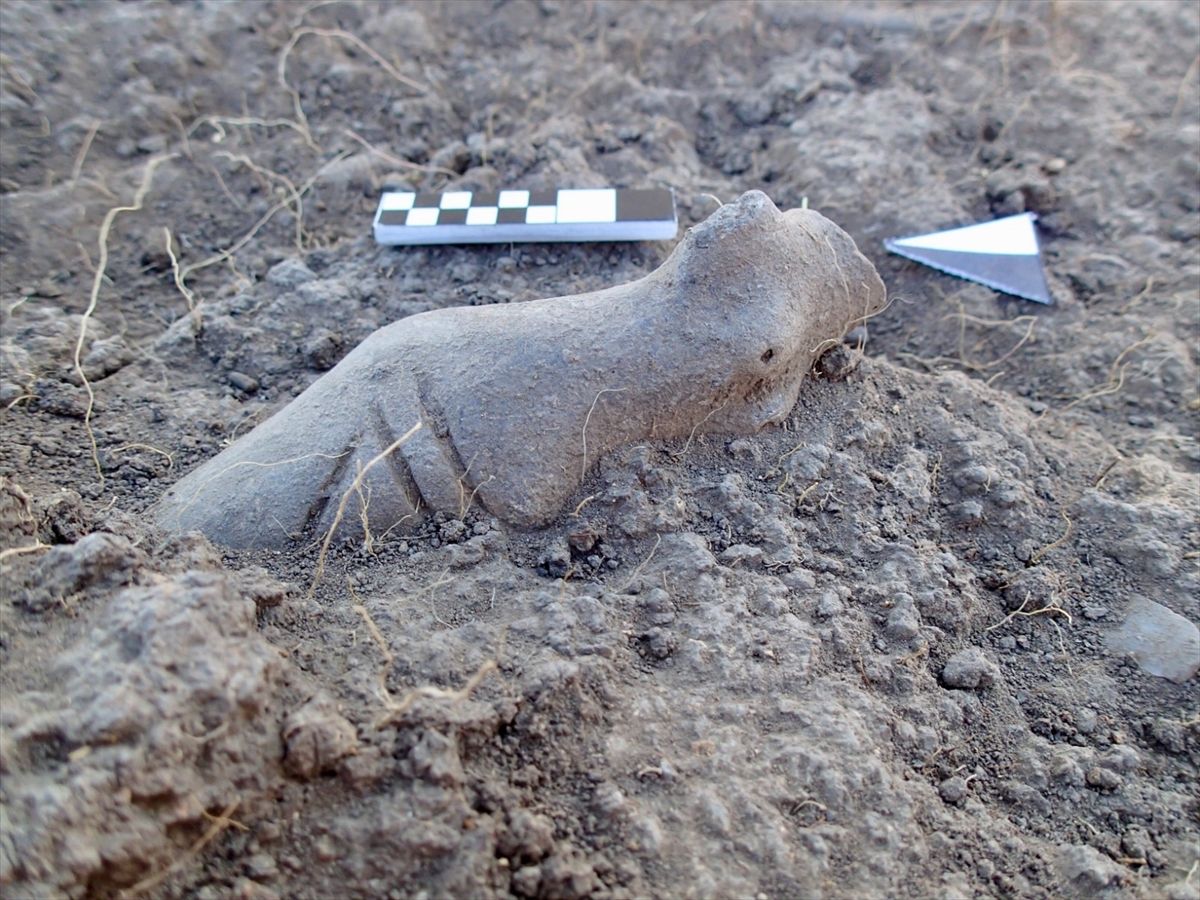
It was determined that 4 decapitated figurines (statues) dating back approximately 8 thousand years ago, discovered in the Kanlıtaş Mound near Eskişehir’s İnönü district, were used in Neolithic period building closure rituals.
Excavations in Kanlıtaş Mound, the oldest settlement in Inner Western Anatolia, where Eskişehir, Afyonkarahisar and Kütahya are located, have been carried out by Anadolu University since 2013.
Head of the Excavation Group and Anadolu University Faculty of Letters Archeology Department Lecturer Prof. Dr. It was determined that the four decapitated female figurines found during the excavations by Ali Umut Türkcan and his team date back to 8 thousand years ago.
Türkcan and his team determined that the figurines made of terracotta shed light on the beliefs and ritual practices in Central Anatolia in the last phase of the Neolithic period.
The largest is 12-13 centimeters long
Prof. Dr. Türkcan stated to the AA correspondent that Kanlıtaş Mound is one of the oldest dated settlements of the cultural universe called “Badger culture” in Central Western Anatolia.
Emphasizing that many quadrangular planned structures and spaces were unearthed during the excavations, Türkcan stated that they came across female figurines made of terracotta at the base levels of the fill layers of these structures.
Türkcan stated that the figurines are of different sizes and noted that the largest and special example is 12-13 centimeters, while the others are generally 5-6 centimeters.
Stating that the use of figurines was common in the Neolithic period in Anatolia, Türkcan said that the examples found in Kanlıtaş Mound stand out with some of their features.
Prof. Dr. Türkcan pointed out that the heads of some figurines may have been deliberately broken and said, “The fact that the female figurines found in different places that were apparently closed deliberately were headless or had their heads severed suggests that they may have been left for votive purposes when the places were closed.” he said.
A similar application was also found in Çatalhöyük
Türkcan stated that building closure rituals and figurine leaving practices were also seen in Çatalhöyük in the Neolithic period.
Expressing that the findings differ from some examples in Anatolia, Türkcan explained that the hip area of the figurines was particularly emphasized, and that their similarities with the early period female figurines, especially in the Balkan geography and especially in the former Yugoslavia geography, are remarkable.
Ali Umut Türkcan stated that Kanlıtaş Mound and the Porsuk culture have been identified and associated as the pioneer of the Vinça culture seen in the Balkans for many years, and said that the radiocarbon dating results also support this assessment of the earlier Porsuk culture.
Pointing out that the structures that completed their useful life in the Neolithic period may have been closed with various rituals, Türkcan emphasized that the data obtained in Kanlıtaş Mound also showed the continuation of this tradition.
Türkcan added that the findings provide important clues about the cultural traditions carried westward from Central Anatolia, and that they plan to publish the excavation results as a comprehensive scientific monograph and a separate reference book.
