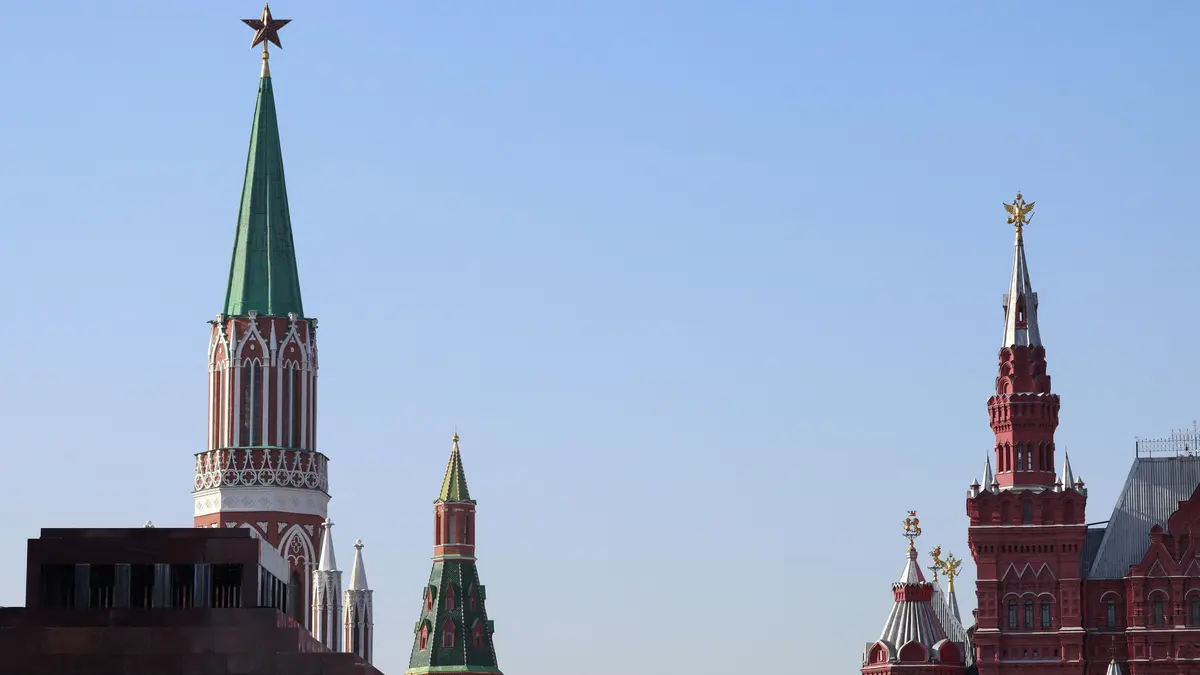
Rossijskaja gazeta first stated that the Czech draft law on foreign agents caused “tumultuous disputes between supporters and opponents of this new legal measure in a European state”. Subsequently, the newspaper was surprised by the fact that, although Prague criticized it at the time of its adoption in Russia in 2012, now it wants to introduce it itself.
“It is ironic that even in 2012 the Czech Republic expressed the traditional European ‘disappointment’ over the adoption of an amendment to the Law ‘On Non-Profit Organizations’ in the Russian Federation. At that time, the Czechs also expressed concern and astonishment at what was happening and did not do without these meaningless phrases,” wrote Rossijskaja gazeta.
At the time, the Russian law was criticized, for example, by the then Foreign Minister Karel Schwarzenberg, who linked it to the trampling of human rights in Russia.
“And so, after several years, the government of Andrej Babiš is launching an active information campaign in Prague for the adoption of the law on foreign influence,” writes Rossijskaja gazeta.
The Russian state daily reminded that the authors of the Czech law, which are SPD deputy Jindřich Rajchl and Babiš’s adviser Natália Vachatová, claim that they were inspired by the American FARA law and not by Russia.
But this was rejected by Tomáš Urban from People in Need, who explained that there is a key element of control in the American law. The foreign entity must have the right to control the actions of the agent throughout the relationship and mere financing is not enough, as in the case of the Czech proposal.
“The Czech proposal is constructed exactly the opposite: any foreign funding is sufficient, control from abroad does not have to be proven. Transparency International, Amnesty International, Doctors Without Borders, and Czech research facilities with grant funding are therefore unjustifiably included in the scope of the law,” he said.
Nacher: Some nonsensical version leaked
In addition to the Russian daily, the proposal of Babiš’s government was also noticed by the world media. It was reported by the newspaper Politico, the European Conservative and Euractiv servers, or the German station Deutsche Welle. Everyone writes about the law as a proposal from the Kremlin handbook, because it is too similar to what Russia adopted in 2012.
Deputy Speaker of the House for ANO Patrik Nacher objected on the X network that the authors of some of the articles are Czechs with ties to the former cabinet. He later added to the law itself that it will look different in its final form. “Some nonsensical version leaked here,” he noted.
The draft law, which was leaked to the media and is therefore not public, assumes that entities that use foreign financing or links will have to register in the register. If they did not do so, they could face hefty fines. Such laws caused a huge wave of criticism not only in Russia, but also in Hungary and Slovakia, where they were ultimately not passed.
Foreign Minister Petr Macinka (Motorists) declared that the government will enforce the law. “We have it in the program statement of the government, so we want to do this and we will do it,” said Macinka. In addition, according to him, this is not a law that the Czech government would copy from Russia. “I think that if you don’t have arguments, throw in Russia, that’s a classic,” he added.
The opposition called on Babiš to stop the preparation of the law. Former Foreign Minister Jan Lipavský (for ODS) called it “a Russian recipe for totalitarianism”. Even universities and non-profit organizations opposed it.