The Hungarian website portfolio.hu, referring to the FT, stated that the relevant document was prepared at the end of 2025 by order of the Kremlin by the Russian media consulting firm Social Design Agency, which is subject to Western sanctions. “It describes a detailed communication strategy for influencing the Hungarian political space in order to help the current ruling party,” the website said.
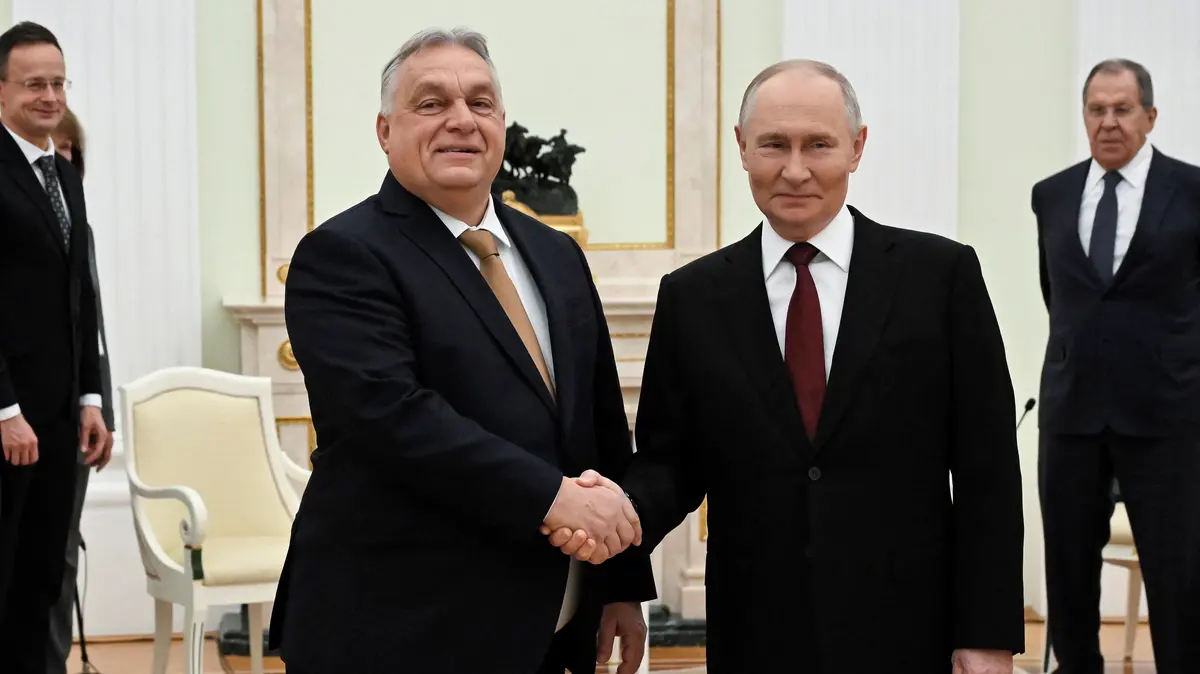
The consulting firm proposed an online campaign that would use Hungarian influencers and social networks for the coordinated dissemination of messages created in Russia. “The plan is to portray Prime Minister Orbán as the only leader capable of protecting Hungarian national sovereignty and negotiating with world leaders as an equal,” the website stated.
Puppet of Brussels
The strategy portrays Orbán’s main opponent, Tisza Péter Magyar, as a puppet of Brussels and tries to undermine the credibility of this opposition party. “The strategy would portray the Tisza party as incompetent, divided and driven by hidden political goals,” added the website portfolio.hu.
The plan emphasizes that Russian involvement in the campaign must remain hidden, as open Russian support could harm Orbán’s party. According to the FT, such a campaign could be coordinated by the deputy head of the Russian presidential office, Sergey Kiriyenko. Kremlin spokesman Dmitry Peskov questioned the conclusions of the British newspaper, saying that the FT could have drawn the wrong conclusions.
The chairman of the parliamentary faction of the Fidesz party, Máté Kocsit, described the information of the British newspaper as speculation and fake news.
GRU in action
On the contrary, opposition leader Péter Magyar supported this information last Friday at a pre-election meeting in the city of Mosonmagyaróvár by claiming that the Russian military intelligence agency GRU is already operating at the Russian embassy in Budapest, which wants to influence the outcome of the elections in favor of Orbán.
“Since the time of János Kádár (Hungarian communist leader from 1956 to 1988, note editorial office) it did not happen that a Hungarian politician invited Russians to the country. Their task is to influence the Hungarian elections. I don’t need to emphasize in whose favor they want to influence them,” said Magyar. “They are the same people who influenced the elections in Moldova, for example,” said the opposition leader.