
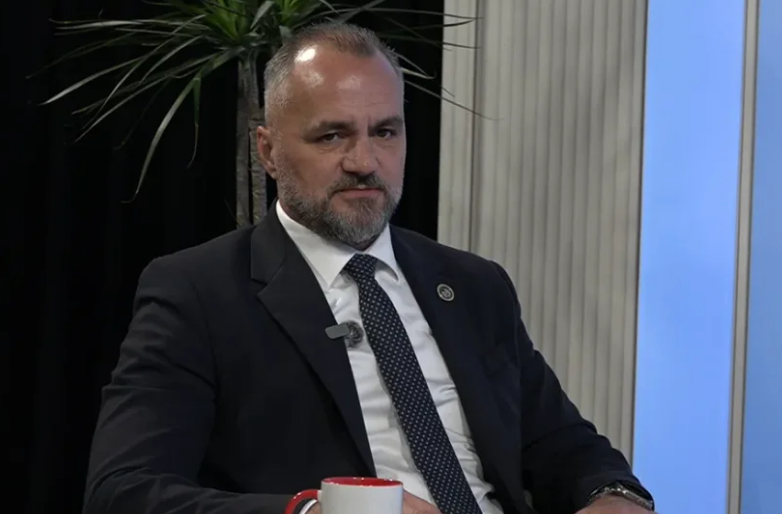
The Executive Director of the American Center for Combating Extremism and Terrorism (ACCET), Arianit Shehu, estimates that the Progress Report of the European Commission confirms Albania’s advancement towards membership in the European Union.
In an editorial, Shehu emphasizes that integration should remain above party interests, reports KosovaPress.
Shehu considers that the report published on November 4, 2026 constitutes an important institutional assessment of Albania’s reforms and results, recognizing the commitment of the government of Edi Rama and the Albanian administration in the integration process.
According to him, the opening of all negotiating chapters and the provisional closure of 4 of them prove the concrete progress of the country, while the objective of completing the negotiations by the end of 2027 remains ambitious, but achievable if the pace of reforms continues.
“Albania’s progress towards membership in the European Union is the good news that Albanians have been waiting for decades. The opening of all negotiating chapters and the advancement of the integration process are concrete achievements, for which Edi Rama’s government, its political commitment and the work of the Albanian administration deserve appreciation”, writes Shehu.
He emphasizes that the European Commission’s report constitutes an institutional response to efforts to destabilize Albania, warning that violence may negatively affect the international image, investments and tourism.
“The European Commission’s report constitutes a strong institutional response to violent attacks and coordinated efforts to destabilize Albania. These actions risk serving hostile interests that aim at a divided Albania, with weakened institutions and a compromised European perspective,” he says.
However, Shehu underlines that the responsibility for organizing such actions requires evidence, while the institutions must respond to the challenges through the strengthening of democracy and national unity.
In his analysis, he assesses that the Brussels report is not a political document in support of the government or the opposition, but an instrument for measuring the fulfillment of European standards.
According to Kosovapress, Shehu emphasizes that the positive findings should not be ignored due to internal political clashes, but at the same time, he demands serious treatment of remarks about corruption, polarization and strengthening of institutions.
Referring to political developments in Albania, he distinguishes between peaceful protest as a democratic right and violent actions against institutions.
“Peaceful protest is a fundamental democratic right, but attacks on institutions, destruction of property and violent acts cannot be considered legitimate alternatives to democratic dialogue”, emphasizes Shehu.
According to him, the report does not delegitimize the opposition nor the citizen protest, but provides an objective basis for political debate based on facts, institutional responsibility and respect for the democratic order.
In conclusion, Shehu demands that European integration be treated as a national strategic interest, beyond political differences.
“Albania’s European future will not be determined by violence but by the quality of reforms, the stability of institutions and concrete results. At crucial moments for the future of the nation, Albania’s interest must stand above any party, personal or political interest”, concludes Shehu.
Full text:
The latest Progress Report of the European Commission, published on November 4, 2026, constitutes an important assessment of Albania’s European journey. This document provides an institutional and independent overview of the country’s reforms and concrete results.
Albania’s progress towards membership in the European Union is the good news that Albanians have been waiting for for decades. The opening of all negotiating chapters and the advancement of the integration process are concrete achievements, for which the government of Edi Rama, its political commitment and the work of the Albanian administration deserve appreciation. This is a moment of pride and hope for every Albanian, regardless of political beliefs. We still have work ahead of us, but today we have reason to rejoice together. Because beyond the politics of the day, what matters is that Albania is getting closer to realizing our common European dream.
The message from Brussels is clear: Albania has made significant progress towards membership in the European Union. The opening of all negotiation chapters and the provisional closure of four of them prove a concrete advancement of the integration process. The objective of concluding negotiations by the end of 2027 remains ambitious, but achievable if the pace of reforms is maintained.
The European Commission’s report constitutes a powerful institutional response to violent attacks and coordinated efforts to destabilize Albania. These actions risk serving hostile interests that aim at a divided Albania, with weakened institutions and a compromised European perspective. While responsibility for their organization requires proof, the consequences of violence for international image, investment and tourism are serious concerns. Albania must respond to these challenges with national unity, institutional strength and determination on its irreversible path towards the European Union.
The report of the European Commission represents one of the most credible instruments for evaluating the work of Albanian institutions. It is not drafted to support the government or the opposition, but to evaluate the fulfillment of European standards.
Therefore, the report’s positive findings cannot be ignored because of domestic political interests or narratives. At the same time, remarks about corruption, political polarization and strengthening of institutions should be treated seriously.
In this context, the assessment of Brussels highlights the contrast between documented institutional progress and efforts to shift the political debate towards confrontation and violence. Peaceful protest is a fundamental democratic right, but attacks on institutions, destruction of property and violent acts cannot be considered legitimate alternatives to democratic dialogue.
The report does not delegitimize the opposition or citizen protest. On the contrary, it sets an objective standard for public debate, where criticism and political alternatives must be based on facts, institutional responsibility and respect for the democratic order.
European integration is a national interest
Integration in the European Union is not the property of any government or political party. It is a national strategic objective and a common aspiration of Albanian citizens.
The progress recognized by the European Commission deserves to be evaluated as a result of reforms and institutional engagement, recognizing the work of the government and administration, but also demanding the continuation of reforms and the strengthening of political accountability.
Albania’s European future will not be determined by violence but by the quality of reforms, the stability of institutions and concrete results. At crucial moments for the future of the nation, Albania’s interest must stand above any party, personal or political interest.
