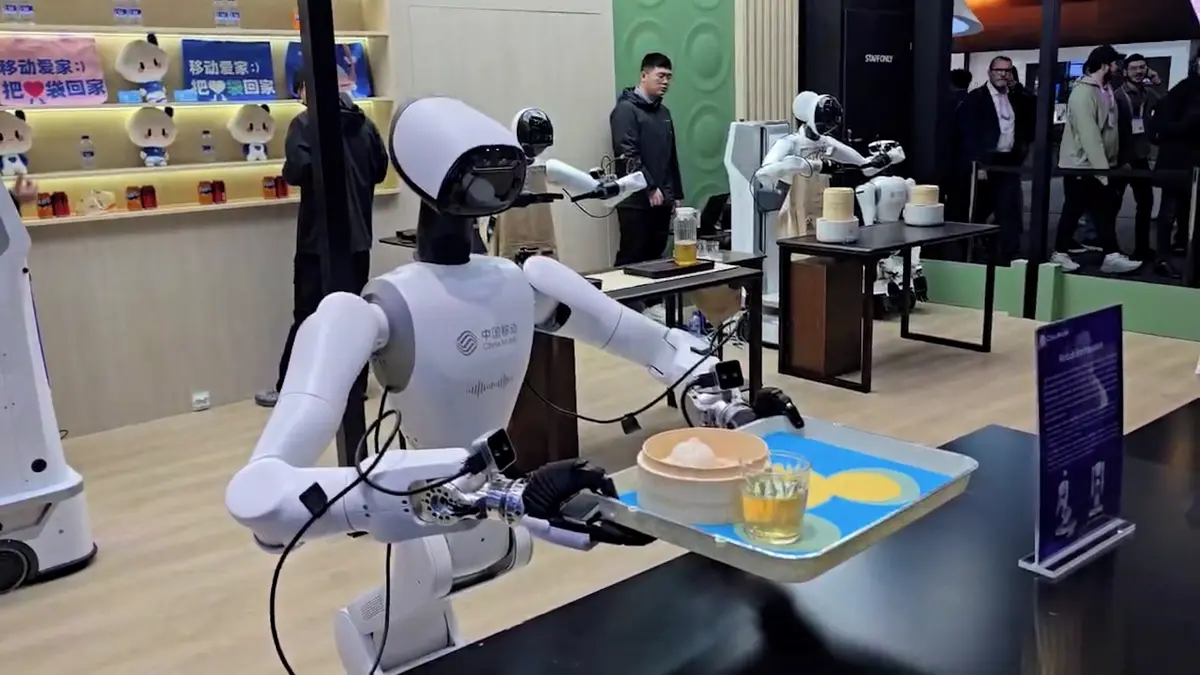
At the time when the Novinek reporter was on the scene, the robotic waitresses looked more like tired idlers than futuristic helpers. They moved slowly, uncoordinated, and without an obvious goal along the designated area stylized as a modern restaurant. It was not clear from their trajectories whether they were delivering food, looking for a customer, or just wandering.
Sometimes they stopped, as if they were thinking. Other times they changed direction for no apparent reason. If it was a demonstration of autonomous decision-making, it acted more like a demonstration of the existential crisis of machines.
The highlight of the entire presentation came when one of the visitors ordered food and drinks via tablet on the instructions of the organizer. Everything went according to the script – at least initially. The robotic chef prepared the order, the robotic waitress came to take it. But only a part – the dessert in the form of an apple was forgotten…
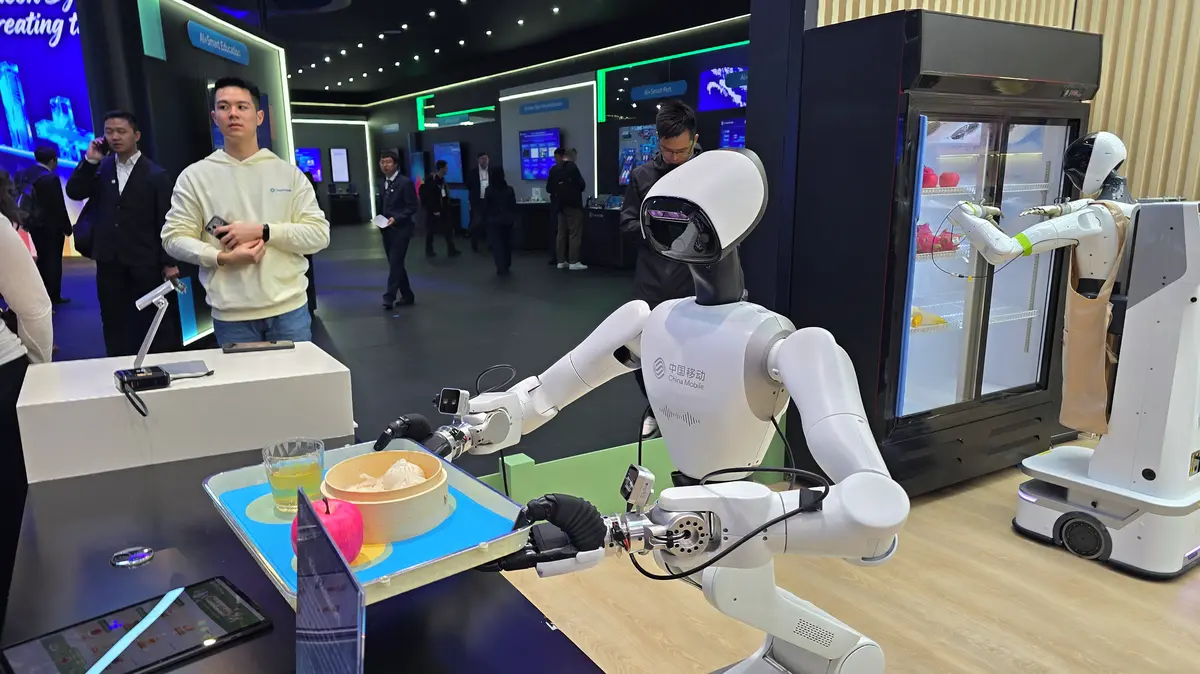
Photo: Miloslav Fišer, Fairpress
The presentation of the robotic kitchen at the MWC 2026 fair did not go too well.
“Temporarily closed”
With an incomplete “catch”, she then went in the completely opposite direction from where the customer was waiting. Instead of the counter, she headed to another part of the exhibition, where she stopped in confusion.
In the meantime, it was busy backstage. Chinese technicians were arguing, quickly typing commands into laptops and trying to remotely “persuade” the robots to do what they were supposed to do. At first glance, it was obvious that instead of autonomous cooperation, emergency remote control is taking place.
After several minutes of futile attempts to correct it, there was a silent admission of defeat. The robotics show ended inconspicuously – a sign with the inscription “temporarily closed” was placed on the counter.
Visitors who were expecting a futuristic experience instead took away a lesson from the fact that there is sometimes a really long way between vision and reality.
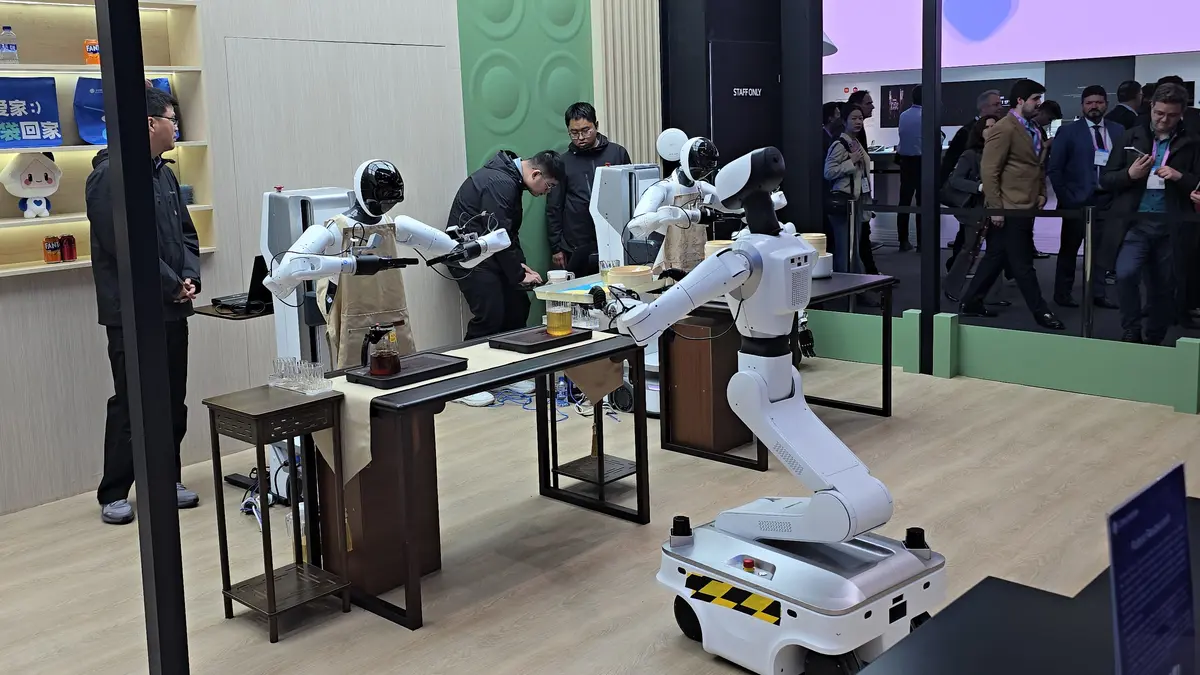
Photo: Miloslav Fišer, Fairpress
In the background you can notice the programmers trying to convince the robots to work.
How should it work?
According to the manufacturer’s official presentation, it is the very first comprehensive self-service restaurant solution of its kind in the industry.
The basis of the concept is the Lingxi robot with its own artificial intelligence (AI), which is supposed to control the cooperation of several robots at the same time. The system is designed to handle multiple tasks in real time – from taking the order to preparing the food and delivering it to the right customer.
A planning system for multiple robots and multiple tasks should play a key role. With the help of its own VLA model, it is supposed to solve the assignment of tasks, prevent collisions and coordinate operations in complex scenarios where multiple autonomous machines are moving at the same time.
The solution also includes a technology known as VLA-RAIL – that is, a system of asynchronous evaluation in real time. According to the manufacturer, this should bring a breakthrough in the performance and fluidity of robot movement. Thanks to it, they should be up to 1.3 to 1.5 times faster than with classic human remote control.
On paper, it is an ambitious, scalable model that could automate the entire operation of a fast food restaurant. From order to preparation to delivery.
At the exhibition center in Barcelona, however, the future of gastronomy seemed more like a beta version, which clearly calls for the next update.