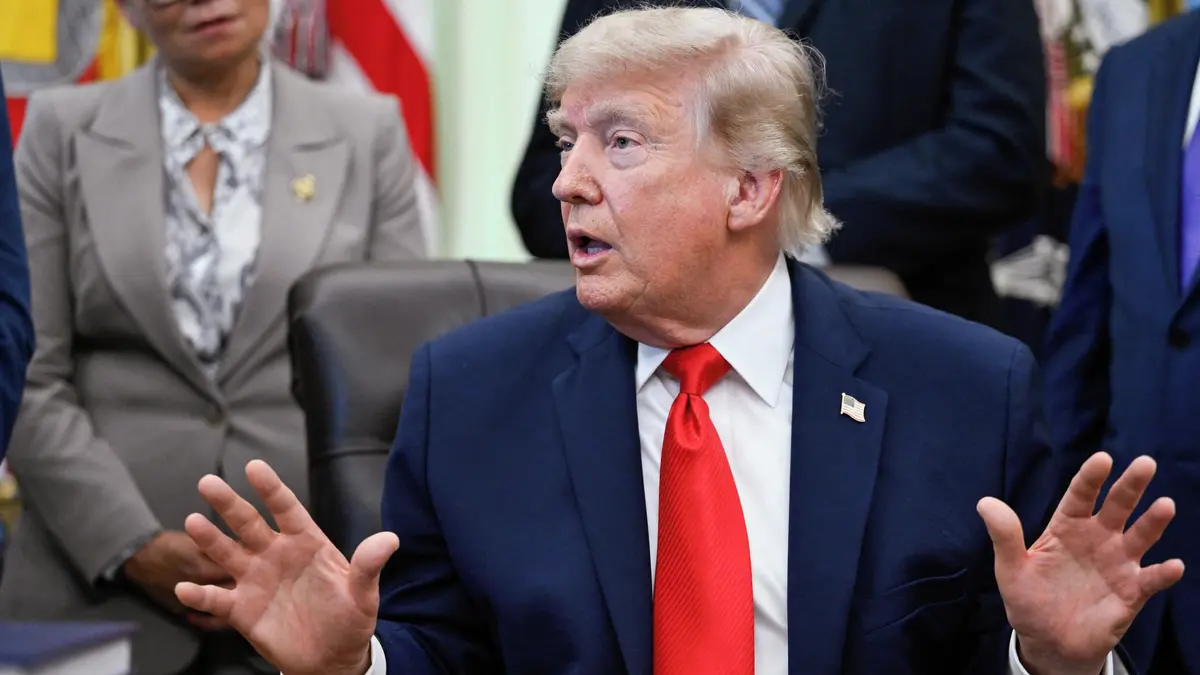
According to the website Politico, two administration officials and a diplomat familiar with these phone calls said that not only the Emir of Qatar, Tamim bin Hamad Al Thani, but also the President of the United Arab Emirates, Muhammad ibn Zayed Al Nahyan, and the Pakistani army chief, Asim Munir, contacted Trump by phone.
The countries listed above have an influence on Tehran and its supreme leader Mojtab Khamenei. According to one of the representatives of the US administration, Trump gave way to arguments and assurances that an agreement was close and withdrew the plans for the attack.
Trump wrote on his social network Truth Social that the agreement could be signed this weekend. “We just reached a great resolution to the Iran war and the documents are about to be finalized,” Trump said, adding: “We should be done within a few days.”
But the news from Iran sounded different. Esmaeil Baghaei, a spokesman for the Foreign Ministry, said that although large parts of the negotiating text are being finalized, Iran will not budge on its red lines. “Iran has not yet reached a final conclusion on the deal,” he said. Nevertheless, American and Arab representatives were cautiously optimistic.
According to an Israeli source, the only thing on the table is an agreement to reopen the Strait of Hormuz and end the American blockade on this important trade route. US Secretary of State Marco Rubio told Congress last week that detailed nuclear discussions will take more time, with opening the Strait of Hormuz the first step.
More demanding negotiations on the Iranian nuclear program came later.
It is not yet clear whether Khamenei agreed. US officials said he was seriously injured in the early days of the war and is in hiding without access to digital technology for fear of US and Israeli attacks. Diplomats are skeptical as to whether Khamenei is even capable of commenting or agreeing to anything.
A source close to the US administration said that the veracity of the agreement will depend on who the Trump administration is negotiating with. “If it’s the political leadership that’s in power, then it’s real. As for the Iranian Revolutionary Guards, not so much,” the source said.
Any deal is likely to face opposition from Israeli Prime Minister Benjamin Netanyahu, who in February called on Trump to attack Iran over its nuclear program. The Israeli Prime Minister wants the possible agreement to also include the removal of enriched material from Iran.