
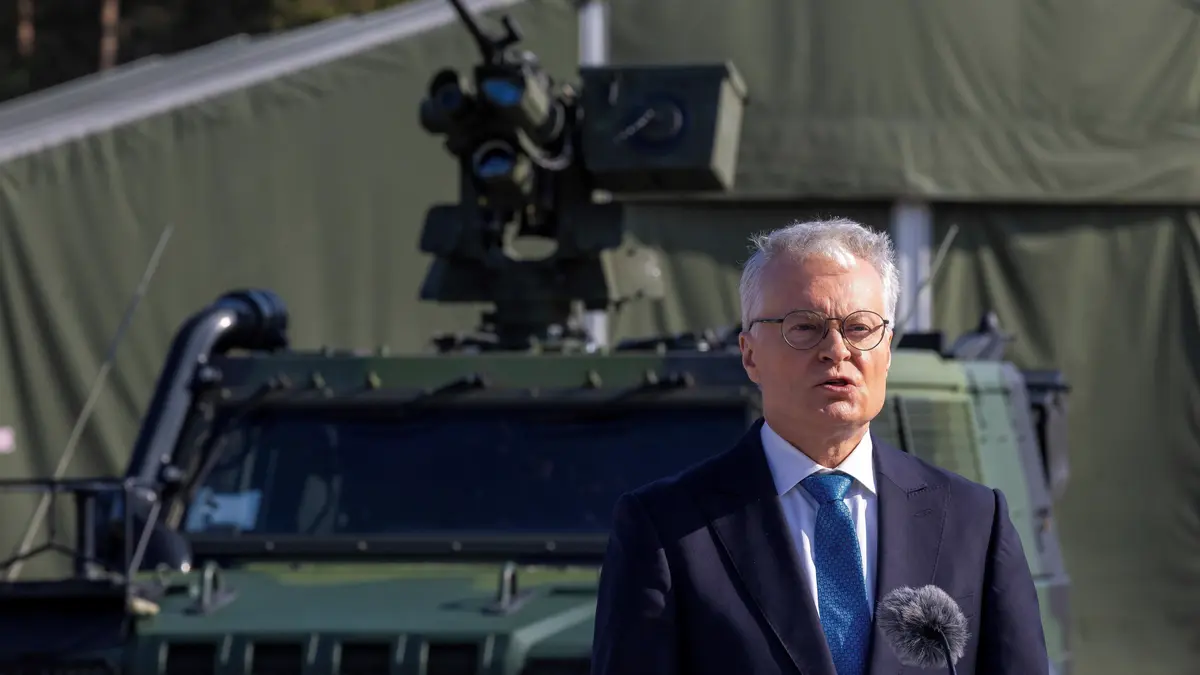
“We believe that one of the most serious and permanent threats is the possible movement of former and current Russian fighters in the Schengen area. Any entry of such an individual could have serious consequences for the security of all EU member states. A decisive and coordinated intervention is therefore urgently needed to prevent negative consequences!” Lithuanian President Gitanas Nausėda commented on the call.
According to the letter, in addition to Russian hybrid operations, former Russian soldiers may also be involved in organized crime or extremist movements on the territory of the European Union. At the same time, he emphasizes that more than 180,000 current Russian soldiers are convicts who were released in exchange for signing a contract with the army, the Ukrainska Pravda server quotes from the letter.
The number of Schengen visas issued to Russian citizens has increased significantly in recent years. In 2024, compared to the previous year, it jumped by more than 100 thousand, from 449 to 565 thousand. According to current estimates, the number of visas issued last year is also between 540 and 570 thousand.
For example, in 2019, before the Covid-19 pandemic and the start of the war in Ukraine, Russian citizens received more than 4 million visas, so these are still relatively low numbers compared to before.
Inaction in this matter, according to the letter signed by the presidents and prime ministers of eight countries, could create a long-term weakness, but it is still possible to prevent it. The European Commission should therefore address the issue and propose possible solutions at the EU level. According to the signed leaders, the topic should be discussed at the EU summit in March, at the end of which the leaders of all member states should issue a joint statement.
Estonia already came up with the idea of banning entry into the Schengen area for former members of the Russian armed forces who took part in the invasion of Ukraine. At the national level, it has also approached it by itself. Lithuania is also preparing the same ban at the national level. The head of European diplomacy, Kaja Kallasová, said that it is supported by several EU members and will still be discussed.
