
Muhanad Silúm from the Doha Institute for Postgraduate Studies of International Politics and Security published an unusually conciliatory commentary on the US-Israeli approach, the wording of which had to have the approval of the state’s political leadership.
The author mentions the voices that it is a war without a clear plan and goals, which is amplified by the contradictory statements of the US President Donald Trump. Here he wants to act, here he demands unconditional surrender. Silum does not ignore Iran’s retaliation, which affects the entire region, as well as rising oil prices and comments warning of an endless war.
Nevertheless, he is convinced that the military success of Operation Epic Fury cannot be evaluated based on this. It emphasizes that its strategic intention is the overall weakening of Iran. And according to him, this is really happening.
A weakened Iran
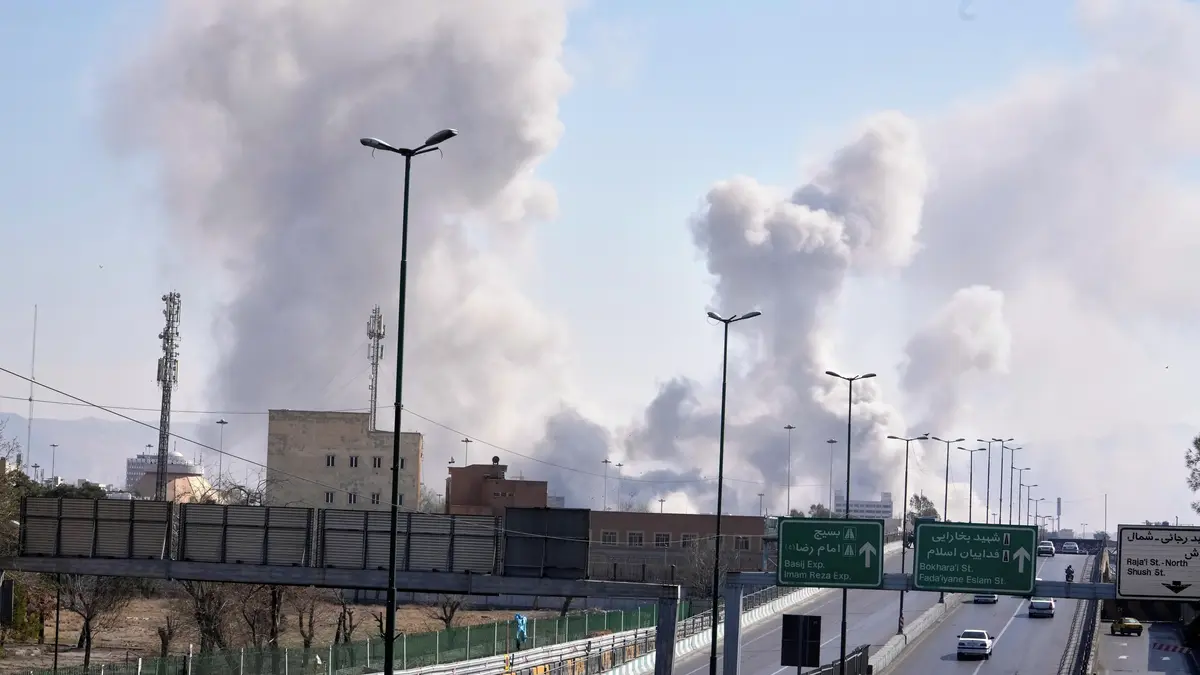
He reminds that the instruments of Iranian power, whether it is an arsenal of ballistic missiles, nuclear infrastructure, air defense, naval forces or command architecture, are systematically weakened and destroyed. If Iran fired 352 ballistic missiles on the first day, in mid-March it was only about 25. That’s a drop of 90 percent. The number of launched drones dropped from 800 to just 75. Arsenals built up over decades are destroyed within days. Hundreds of Iranian launchers are also liquidated.
As early as March 2, the US CENTCOM headquarters announced that it had controlled the airspace over western Iran and Tehran without Iran shooting down a single plane. Even non-stealth category planes cross the sky there without risk.
Now the military industrial complex, factories producing rockets and drones, research centers and ground halls are being liquidated.
Not only frigates, but also minesweepers, fast boats and midget submarines are destroyed, which limits Iran’s ability to block the Strait of Hormuz. The question is not whether it will be made passable, but when it will happen.
Power proxy in spasm
The author does not see the increasing number of attacks by Hezbollah, attacks by pro-Iranian militias in Iraq or the threat from the Yemeni Houthis regarding attacks in the Red Sea as a failure of the plan to attack Iran, because the conflict is expanding. In fact, Iran’s allies are weakened on several levels – both in management and coordination, and in the supply of weapons or financing. He sees uncoordinated actions as a spasm of Iran’s proxy forces.
He also perceives the fact that the slain Ali Khamenei was replaced by his son as a weakening of the regime, which was forced to resort to dynastic succession, which the republic has so far rejected, which also shows weakness.
Doing nothing would also not be free
Silum also rejects the criticism of high costs, because they are seen as wrong. The costs of doing nothing were not zero. If there was no intervention, the situation everyone feared would eventually occur – there would be a nuclear Iran capable of closing the Strait of Hormuz, which would be surrounded by its proxy allies.
