
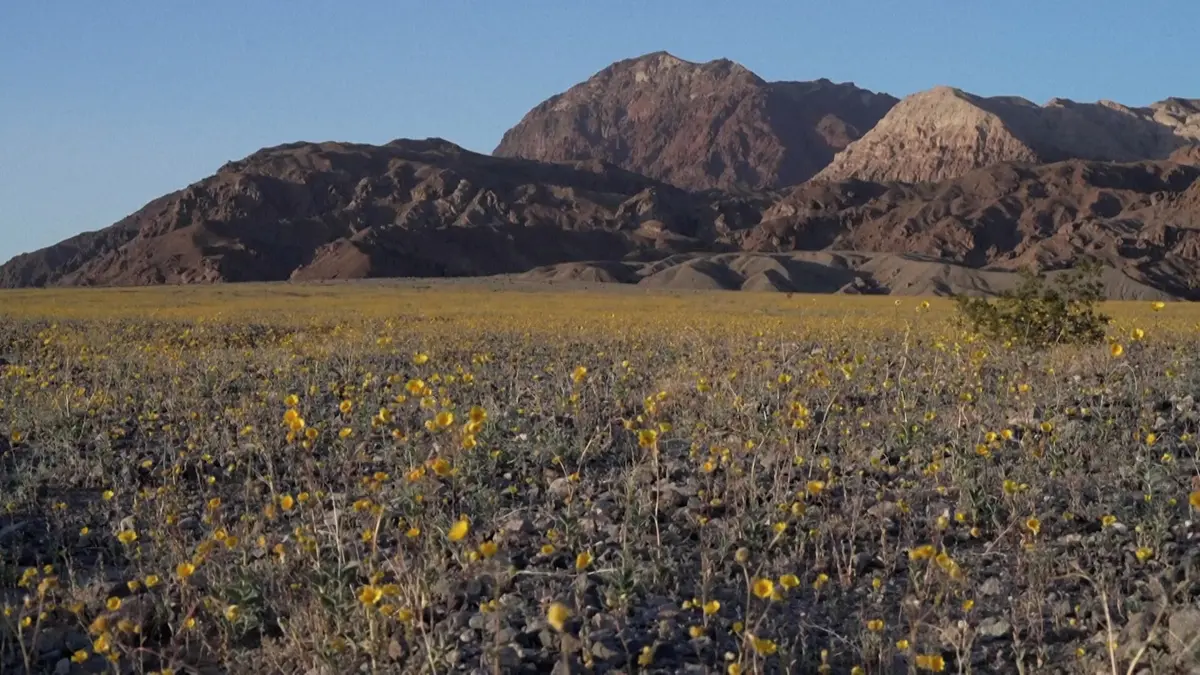
One of the driest and warmest places on the planet has changed beyond recognition. Thousands of flowers bloomed here on large areas. According to the National Park Service (NPS), the area of Death Valley National Park is experiencing its best year for blooms since 2016.
The reason is wetter conditions at the end of last year. According to NBC, Death Valley National Park normally receives about 50 mm of rain per year. However, from November to January, approximately 65 mm of precipitation was recorded here, so in two and a half months it rained more than any other time in a year.
In the local meadows, several pieces bloom every year, but this rarely happens in such quantities. There must be enough rain and the right temperature for that.
According to the NPS, flowering lasts at low altitudes until mid-March, but at higher altitudes the flowers bloom from April to June.
“In Death Valley National Park, most of the showy desert wildflowers are annuals. They are also referred to as ephemeral because they are short-lived. Strangely enough, this limited lifespan ensures their survival. Instead of struggling to survive in the extremes of the desert, annual wildflowers remain dormant as seeds. When it finally rains enough, the seeds quickly sprout, grow, flower, and turn into seeds again before the drought and heat return. Thanks to the mass blooming in good years, wildflowers can attract large numbers of pollinators such as butterflies, moths, bees, and hummingbirds that would otherwise not visit Death Valley,” describes the NPS plant strategy.
