The film takes place in Strážnica. The characters thus speak in Slovak dialect. How did the preparations go?
They were preceded by a long and rather complicated decision whether to go into the dialect at all. We knew that it was a sensitive matter and that we were moving on thin ice. Of course, the director Ondřej Hudeček had the final say, who decided to include the dialect in the film, and I’m very happy for that.
I think it helps him. We tried not to underestimate anything and each of us prepared in our own way. Some listened to authentic recordings, some spent time in Slovakia. We also completed several rehearsals in Prague at the table, and just before the start of filming, we all moved to Strážnice, where the weekly training took place. We went through the texts directly in the locations and in our free time we tried to infiltrate the environment and soak up the local atmosphere.
Did it work?
It was very nice and I like to remember it. A big thank you also goes to our great dialect coach Filip Chlud. He sat in the director’s tent with headphones on his ears and carefully watched over our every inaccuracy. We were most concerned about it not sounding like a cartoon. We wanted to hit the line between too much and too little. I hope it was successful.
From the previews, the film seems like a mixture of genres. How would you define it?
Yes, I think it’s a mixture of genres and it’s completely intentional. It is Ondřej’s handwriting and he does the balance, the fluid and playful transition between genres with admirable ease. I named it “Slovak Western”. “It’s a love letter to heist films, Slovakia and all unlikely heroes”. And above all, I believe and hope that it is a film for the audience and that we have a hit movie with messages that could be popular.
Are you playing the character of the mobster Aleš Sasín aka Assassin? Who is that?
Aleš has a pool. He is a local mobster. A little in the shadows, a little at the source – and always one step ahead. He has his fingers in everything and nothing. He is only interested in money and power influence. His communication is based only on blackmail and intimidation. It is a creature that survives in every system and that we can probably find in every district town. He is almost a folklore figure: something between the godfather, businessman of the year and the chairman of the hunting association. He has a big car, which allows him to live in the belief that he also has a big manhood. Aleš is a motorist. He is misunderstood, underappreciated and lonely.
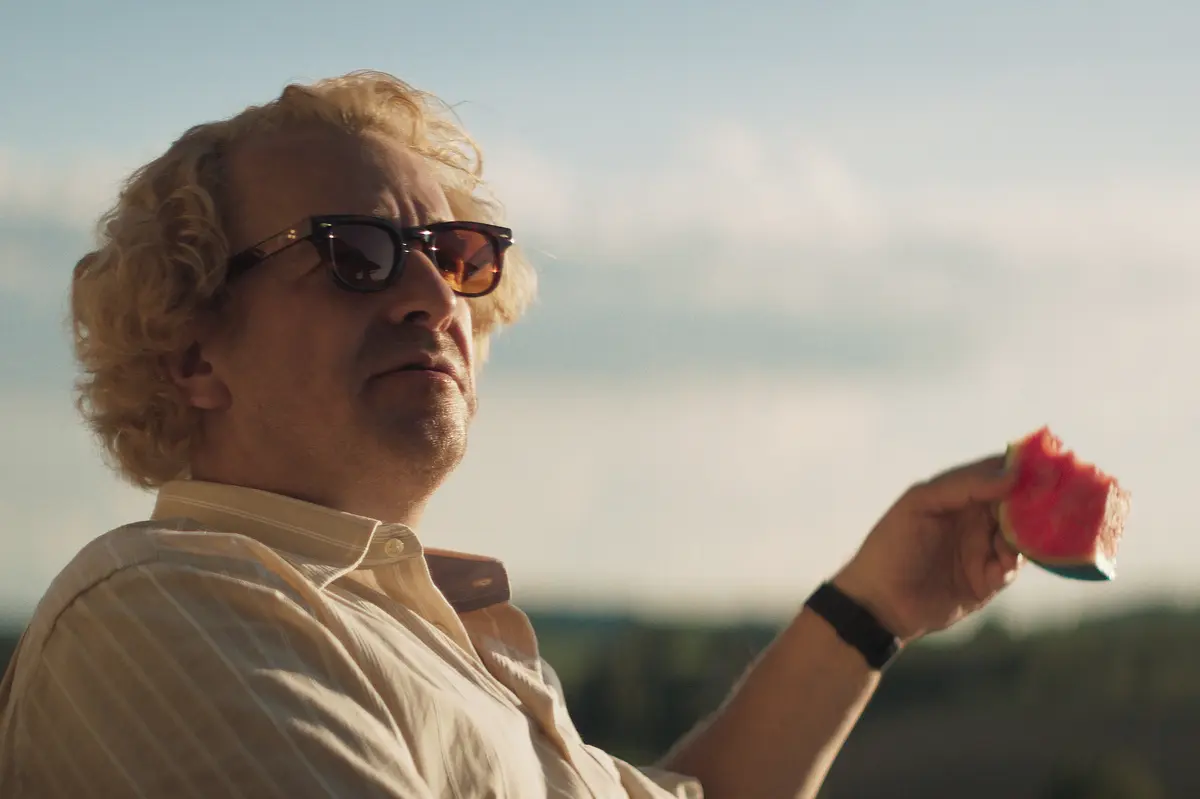
Photo: Bontonfilm
Stanislav Majer completely changed his appearance for the filming of Poberta.
You went through a significant visual transformation for the shoot. How was this idea born?
It was a process of searching. There were more variants of my form. The game included a bald eagle, a mullet and a hedgehog. In the end, we chose this talker. We wanted a significant change and this seemed accurate to us. It’s not just a hairstyle, it’s a statement.
I wanted to gain a little weight so that he would have plump and rosy cheeks. This guy likes himself. She takes care of her hair with love, uses balm and conditioner. She looks like an angel, she is innocence itself. It is like the sun over the Moravian vineyards – it warms and gives sweetness and ripeness to the grapes. But he can also burn those sweet grapes. And wine made from burnt grapes leaves an unpleasant bitterness in the mouth.
How did the surroundings react to the change?
Filming took place in two phases: summer and winter block. I had to let my hair grow for quite a long time before filming, then a test had to be done to make sure it could work. We also had to constantly bleach the growths and finish the perm, at the end the hair was already completely burnt, so the hairstyle entered my life quite a bit.
At first I loved the change, then not so much. The neighborhood reacted differently. Someone didn’t recognize me, someone had fun and someone felt sorry for me. My mother, I think, cried, I don’t know if it was happiness or horror. She is a hairdresser.
The film takes place in the time of covid. What role does it play in the story?
It is primarily a backdrop. We are not trying to tell a story about the pandemic itself, but we are using it as an illustration that puts the characters in borderline situations. It is in such moments that their character is best tested.
What they are willing to do, what they are afraid of and how they react under pressure. When I talked about the film with someone, I often felt concern about the “covid” theme. I totally understand that. It was a difficult, sometimes traumatic time for many people. But our film takes a different approach to it. The pandemic is not depicted here in a burdensome or documentary way, rather it appears in its absurd and at times even comic level. So viewers really don’t have to worry about going to a dark reminder of the recent past.
How do you think the story is relevant today?
Poberta is simply a young, contemporary and fresh film. It is unique and its own. I think that everyone will find a current, resonating topic there. We have a positive hero with a good heart, but he also has a lot of demons and anger in him. He is constantly forced to balance on the edge between good and crime – and Matyáš Řezníček is absolutely charming!
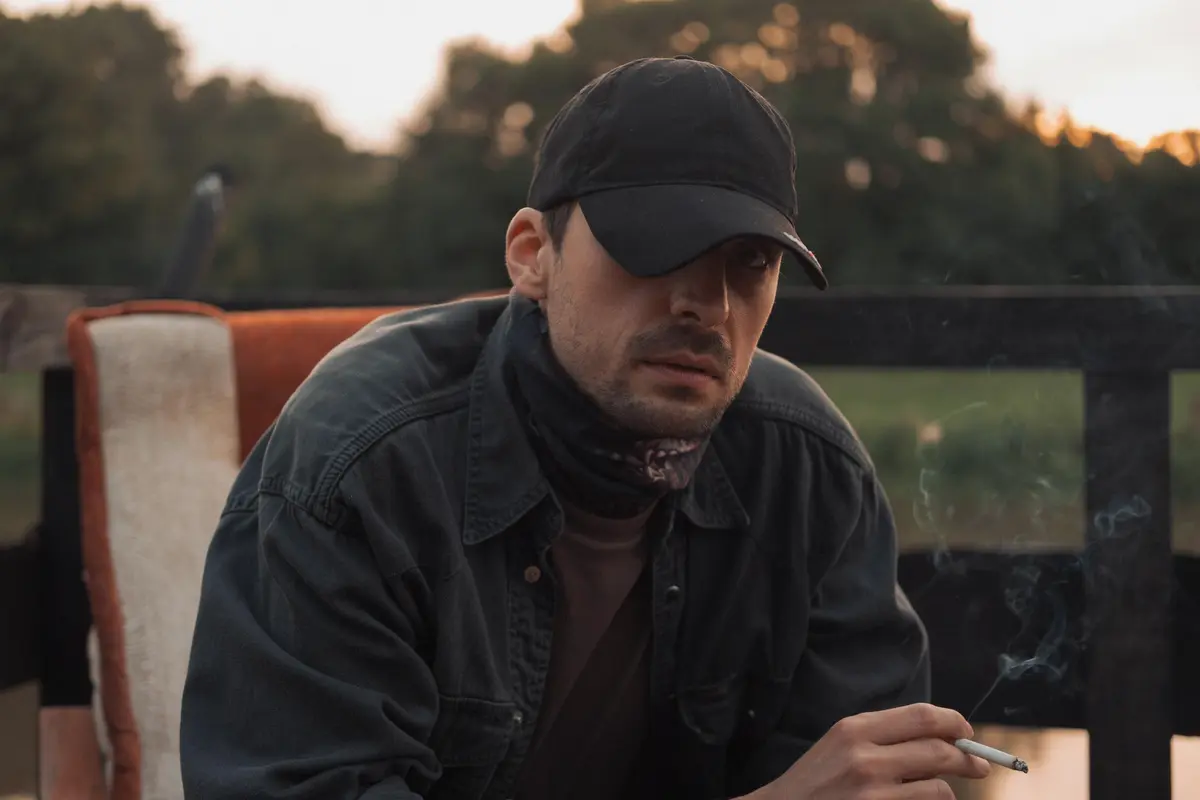
Photo: Bontonfilm
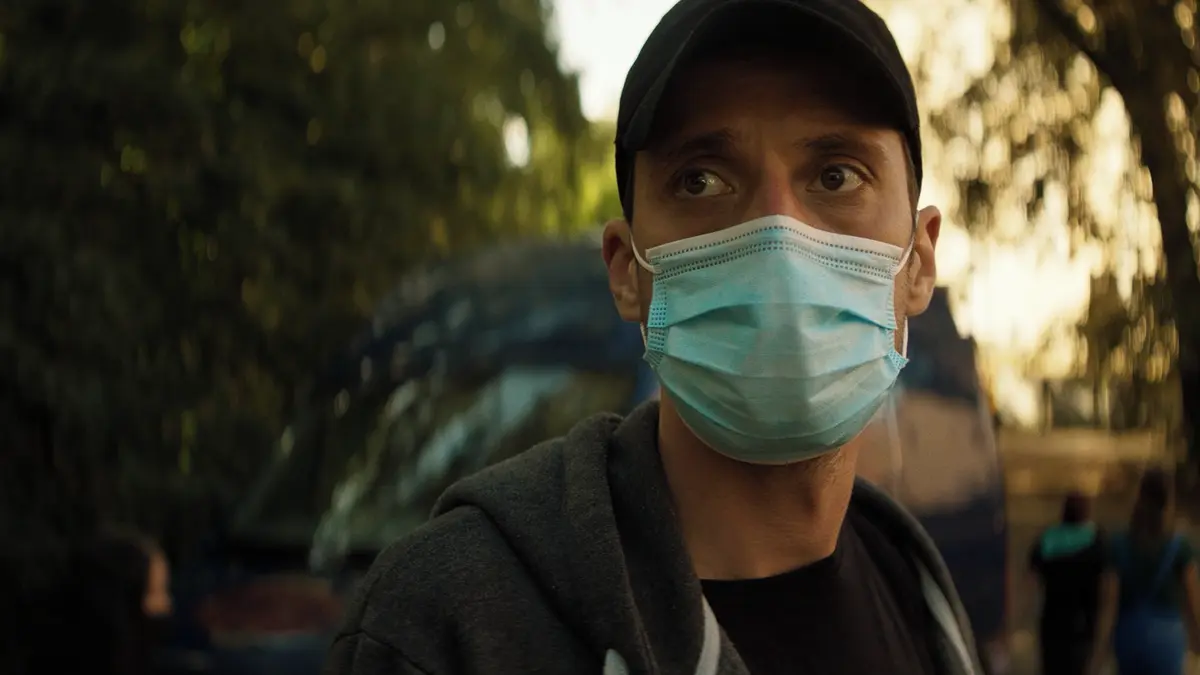
Poberta (2026), Matyáš Řezníček as the useful thief Lupyn
He shows us how difficult it is to bounce back from the bottom, because he lives in a time when it is easier to label someone than to understand him. How difficult it is to get rid of the label that those who are morally superior and those who have butter on their heads put on him. We have a corrupt lawman there.
We have a group of perhaps reformed Judases there. There we have a mother and a girl, whose love transports mountains and men. There is a villain – a small person in power. The type that would be laughable if it weren’t so dangerously harmful.
Exactly such types are fighting for the oars now, completely incompetent people fill important positions, and then light candles on Národní třída and are not ashamed to laugh in people’s faces.
The scene was filmed by Ondřej Hudeček, who is making his feature film debut with the team. How did he convince you that you are into the so-called did he go
He didn’t have to convince me at all. I have known Ondřej for a long time and I admire his work somewhat uncritically. Years ago, when he was still at FAMU, he offered me cooperation in a student film – the short film Framed.
Even then, I immediately got smarter, because it was obvious that he knew exactly what and how he wanted to shoot. I also saw his other short films. It was pleasantly fresh. And then I had a small role in his short film Furiant, which brought him to the world and brought him the prestigious prize for directing at the Sundance festival. Ondřej is a truly exceptional and complex creator. His films are original, authentic, funny and clever. And most importantly – he does everything to the fullest.
He writes the script, stands behind the camera, then edits it and composes the music for it. Of course, he conducts the entire orchestra as a director. And he still smiles and is incredibly nice. You can’t help but love him. So my “deciding” whether to go for it took about half a second. I was rather happy that I could be there.
I will also ask you about the theater, about the adaptation of the Ukrainian book Amadoka, which is to be performed at the X10 Theater in Prague, directed by Dušan Pařízek. What can the audience look forward to?
We are only at the beginning. We ourselves are curious about where testing will take us, so the adaptation of the text is created gradually. Amadoka is a large, multi-layered novel by Sofija Andruchovyč about the fact that war also has a female face. It tells about a man who returns from it with memory loss, and a woman who tries to tell him about his past. It turns out that it is not just one relationship, but the entire history of Ukraine, which was suppressed, stolen and rewritten. The novel is about how one can lose one’s own story – and how difficult it is to put it back together.
Do you continue in the style of Muscovite, Peace on the Western Front/Green Corridors?
I perceive these performances as a certain whole, the upcoming Amadoka could be another piece in the puzzle. I wouldn’t be afraid to call it a kind of “Ukrainian trilogy”, because there are more than enough links between them.
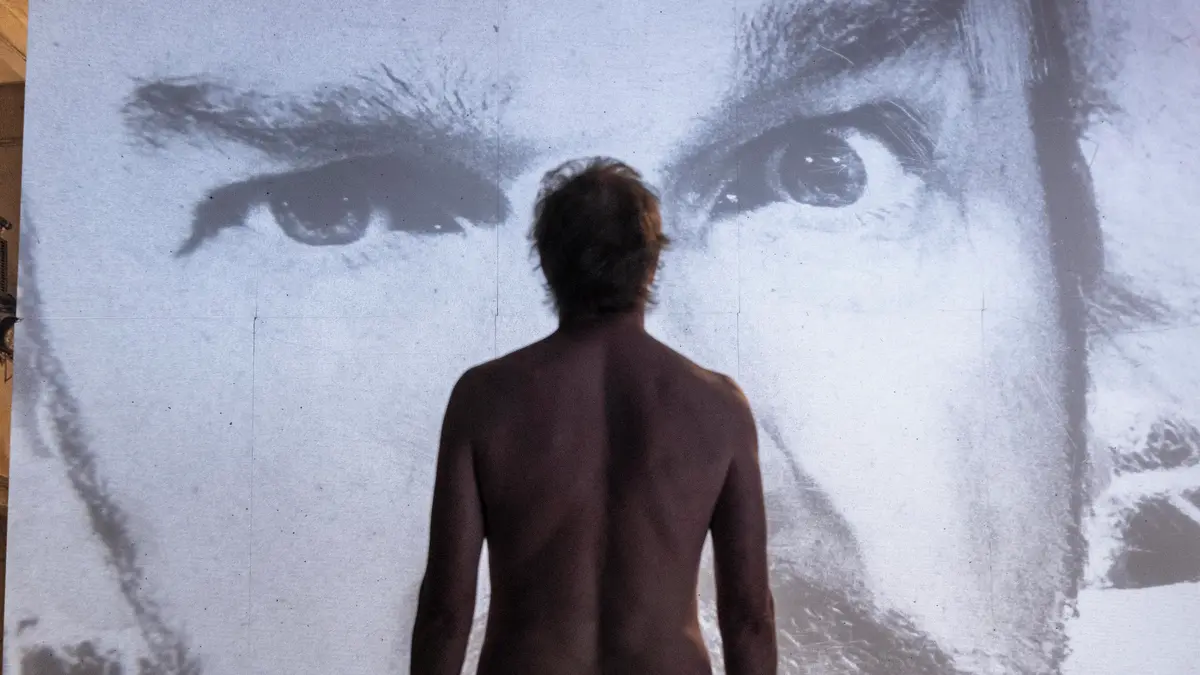
Photo: Patrik Borecký
Martin Pechlát and Stanislav Majer. On the western front, calm/Green corridors. Erich Maria Remarque, Natalie Vorožbyt, Dušan D. Pařízek. Diptych 1918/2022. About soldiers and refugees
For example, the author of Amadoka is the daughter of the poet Jurije Andruchovyč, who wrote Moskoviad. In addition to the joint production team, it is primarily a similar production script: the visual aspect, the work with light, the atmosphere and the way of storytelling. But the theme of the war in Ukraine, which pervades all the titles, is an essential connecting motif.
And now I’m actually missing one more thing, and that’s a certain gender balance exactly in two halves: Muscovyade and On the Western Front are calm texts written by men, while in Green Corridors and Amadoca the theme of war is treated from a female perspective. This makes the production different – not only in point of view, but also in sensitivity, emphasis on other layers and experiences.
The premiere of Amodoka is planned for when?
It will take place on April 1 and 2 in the X10 Theater.
And if you were to invite the audience to any of your work this year, what show/film/series would you mention?
So, of course, we will be looking forward to seeing you at the X10 Theater. I am very curious about the HEC miniseries directed by Michal Samir. It was really beautiful work, but I have no idea when it will be released yet.
And I would very much like Pobert, Ondřej Hudeček, to go to the cinema to see this film. I am really deeply convinced that the film has the potential to become a real audience hit. I even have a bet with the film’s producer, Tomáš Hrubý. If I hit my optimistic guess, he’s paying for dinner. If I miss, I pay. So, please: now it’s all about! Come to the cinema for Poberta! I guarantee that you will not regret it.
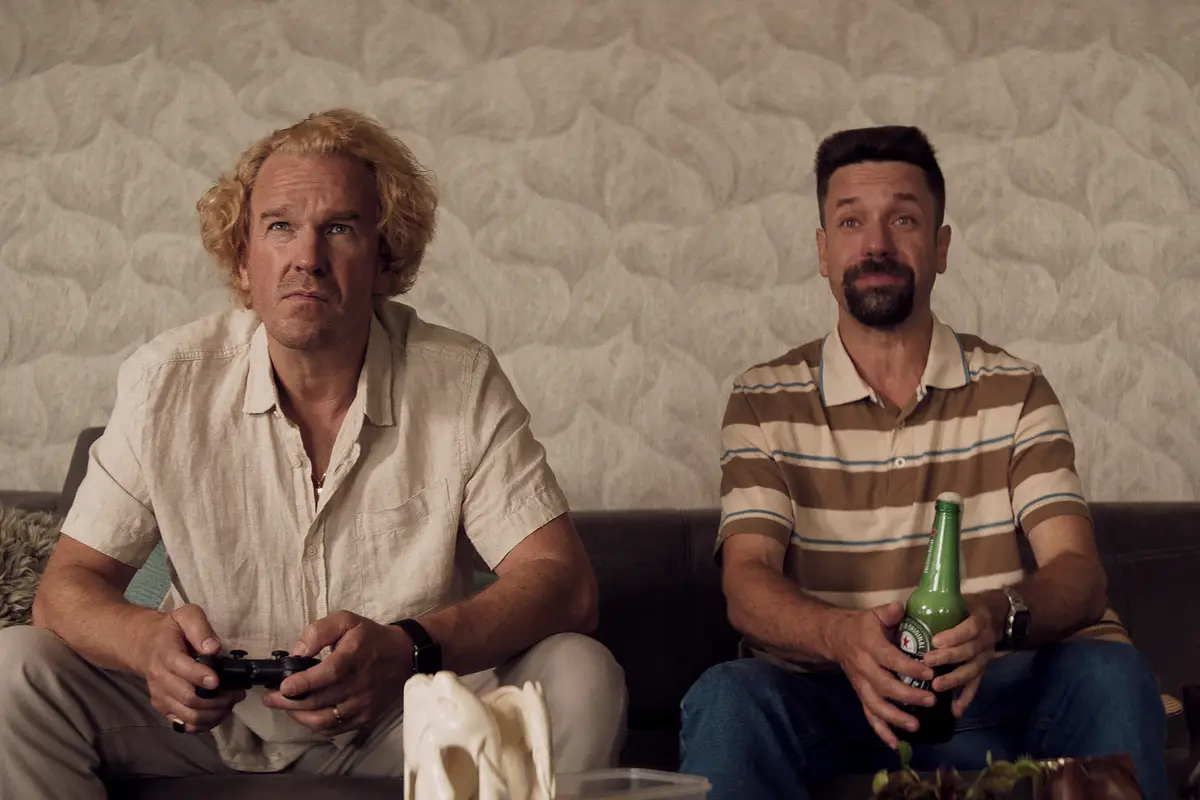
Photo: Bontonfilm