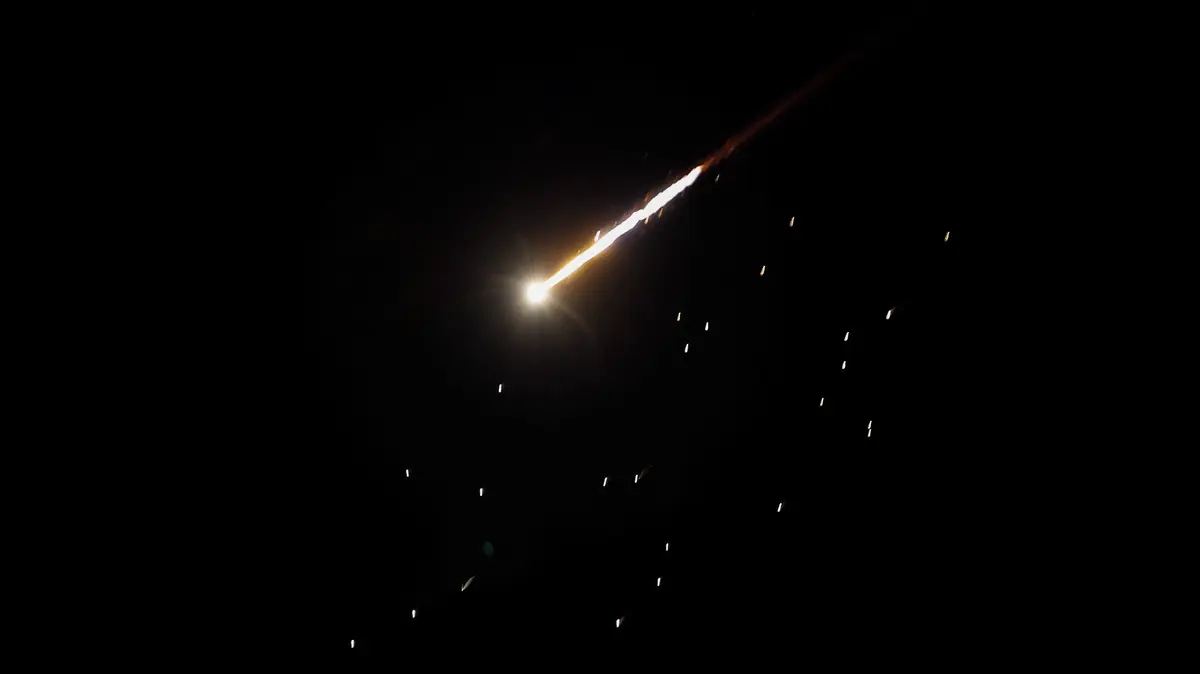
“We are starting to see a decline in Iranian missile attacks. In my opinion, this is due to the work that the US and Israel are doing in destroying the launchers and the successful attacks on these systems,” said one of the officials, who did not want to be named, according to the Financial Times.
The question is how long Iran can withstand the retaliatory force. Drones and missile arsenal are the strength of the country. Tehran may be trying to force the US and Israel to quickly use their expensive defense missiles in an attempt to eliminate the Shahid’s new line of kamikaze drones. Unmanned machines can carry powerful explosives up to a distance of 2,000 kilometers and are programmed to hit specific targets. It was precisely these drones that damaged three American diplomatic missions in recent days.
The low cost makes these drones a challenge for major military powers such as the US and its allies. One drone costs between 20,000 and 50,000 US dollars, while one Patriot missile, which is often used to shoot it down, costs about four million dollars and takes much longer to replace, the CBC website reminds.
“This is the core of Iran’s strategy,” wrote Kelly Griec of the Stimson Center think tank. “For every dollar that Iran spent on drones, the United Arab Emirates spent approximately $20 to $28 to shoot them down,” she said. The US recently copied these Iranian-designed drones, named them LUCAS and accelerated their development.
Iranian drones are easily transported and even launched from the back of ordinary-looking trucks, said Justin Crump, chief executive of Sibylline, a British risk and intelligence consultancy.
Ballistic missiles are another strong point of Iran. The arsenal, the largest in the Middle East, consists of more than 20 types. Many were fired at Israel in June and many more were destroyed by Israeli strikes before they could be used.
Iran’s network of underground warehouses, with production and storage centers, and even firing systems, is extensive. Justin Crump estimates that Iran now has about 2,000 long-range missiles and as many short-range missiles.
At the rate at which they are being used, in his opinion, Iran would have supplies for approximately 10 to 12 days from the moment the United States and Israel launched the strikes. The air war could last for weeks, despite continued US and Israeli airstrikes.
Crump said the attacks and the loss of leadership are taking their toll on Iran, suggesting that the powerful Revolutionary Guard is disintegrating: individual units often decide for themselves when to shoot and what to attack.