
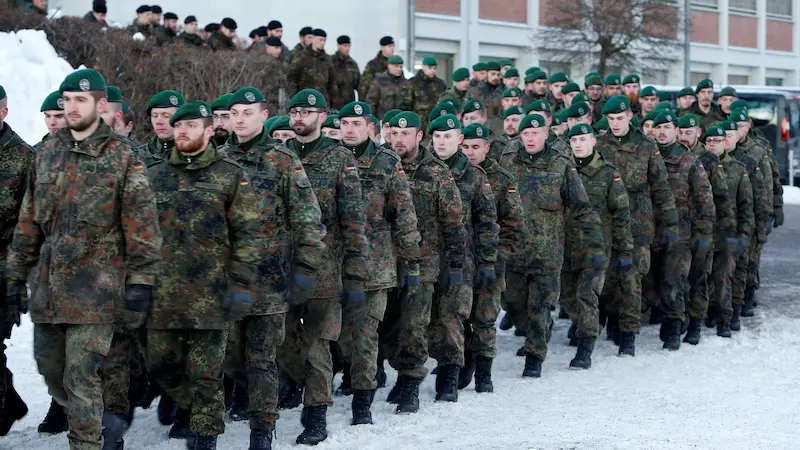
The activity of the Bundeswehr is strictly regulated in peacetime. The adopted amendment explicitly states that the German armed forces can provide assistance in defense against drones. If necessary, the army can also deploy weapons, although their use is considered a last resort in the event that drones could endanger human lives or critical equipment, including infrastructure.
This is how Germany reacts to recent incidents reported by a number of European countries, including Denmark, Norway and Belgium, as well as Germany itself. Due to drones, traffic at many German airports, including Munich, Berlin, Hanover and Bremen, had to be interrupted in the past months. In September, drones monitored critical infrastructure, including submarine docks, a hospital and the state parliament in Kiel, northern Germany. Chancellor Friedrich Merz said in the past that he assumes that Russia is behind a number of drones spotted over Germany recently. Moscow denies responsibility.
Already at the beginning of last October, the German government approved a draft amendment to the Police Act, which will allow the federal police to intervene against dangerous drones, especially in the vicinity of airports, railways and ships. It will also be able to shoot down drones. Even then, the Minister of the Interior, Alexander Dobrindt, stated that in cooperation with the Ministry of Defense, he was preparing a law that would allow the army to intervene on German territory and thus help the police in averting the threat in the event of a larger swarm of drones or in the event of a higher flight level.
The German Basic Law, i.e. the constitution, among other things due to historical experiences from the times of the Third Reich, sharply defines the situations in which the German army can operate on German territory in times of peace. For example, it can help during natural disasters or pandemics. The army has broad powers in the event of an attack on the country.
