
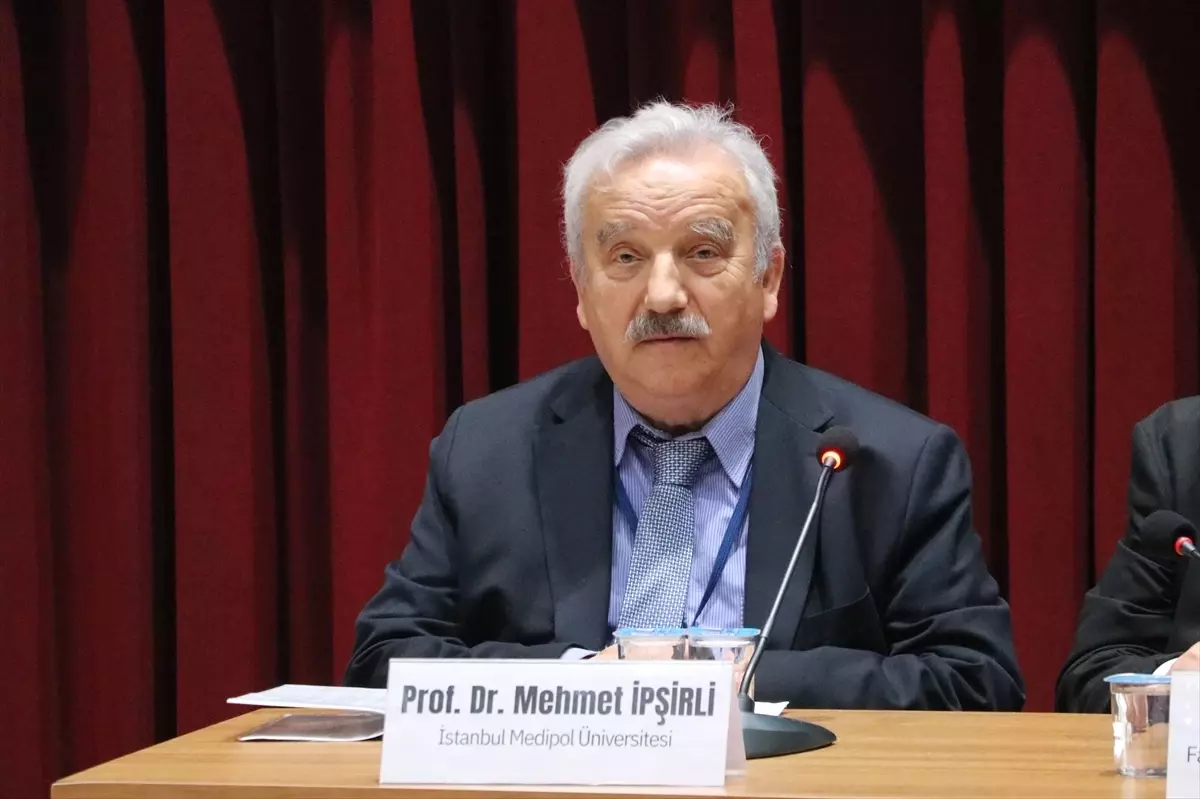
The 2nd International Balkan Symposium organized by Tekirdağ Namık Kemal University (NKÜ) has started.
NKU Rector Prof. Dr. Mümin Şahin said that the Balkans are important for Türkiye at the symposium organized by the History Department of the Faculty of Arts and Sciences and the Balkan Studies Application and Research Center at the Rectorate Conference Hall.
Stating that they carry out studies on the Balkans as a university, Şahin said, “It is very important for us to follow the traces of Ottoman culture and civilization, especially in the Balkans, in order to understand our past, interpret our present and shape our future.” he said.
Istanbul Medipol University Faculty Member Prof. Dr. Mehmet İpşirli also stated that the Balkans is also called “Rumelia” or “Southeastern Europe”.
Explaining that the Ottoman Empire has made great efforts for the Balkans throughout history, İpşirli said, “It is important to remember our ancestors and the works there, but our interest in the Balkans and our concentration there should be related to the future. Indeed, the friendships, contacts and cooperation of the Republic of Turkey in the Balkans are extremely important. We must clearly state that we respect the independence, borders and administrative forms of all the states there.” he said.
İpşirli also underlined that the Ottoman Empire left very important works to the Balkans throughout history.
Referring to the Ottoman settlement policies towards the Balkans, İpşirli said:
“The Ottoman Principality emerged as a small principality in Anatolia at the beginning of the 14th century and took on the task of defending the borders against Byzantium. In the mid-14th century, it moved to the Balkans and gained new opportunities. While the powerful Seljuk successor principalities in Anatolia were struggling with each other, this transition of the Ottoman Empire offered a new alternative. The Ottoman Empire saw the Balkans as a homeland and carried out settlement and development activities. With its settlement policies Families causing unrest were settled in the Balkans, thus reducing the unrest and, most importantly, increasing the Muslim population in the Balkans.”
The symposium, which will continue with presentations by academics, will end tomorrow.
