
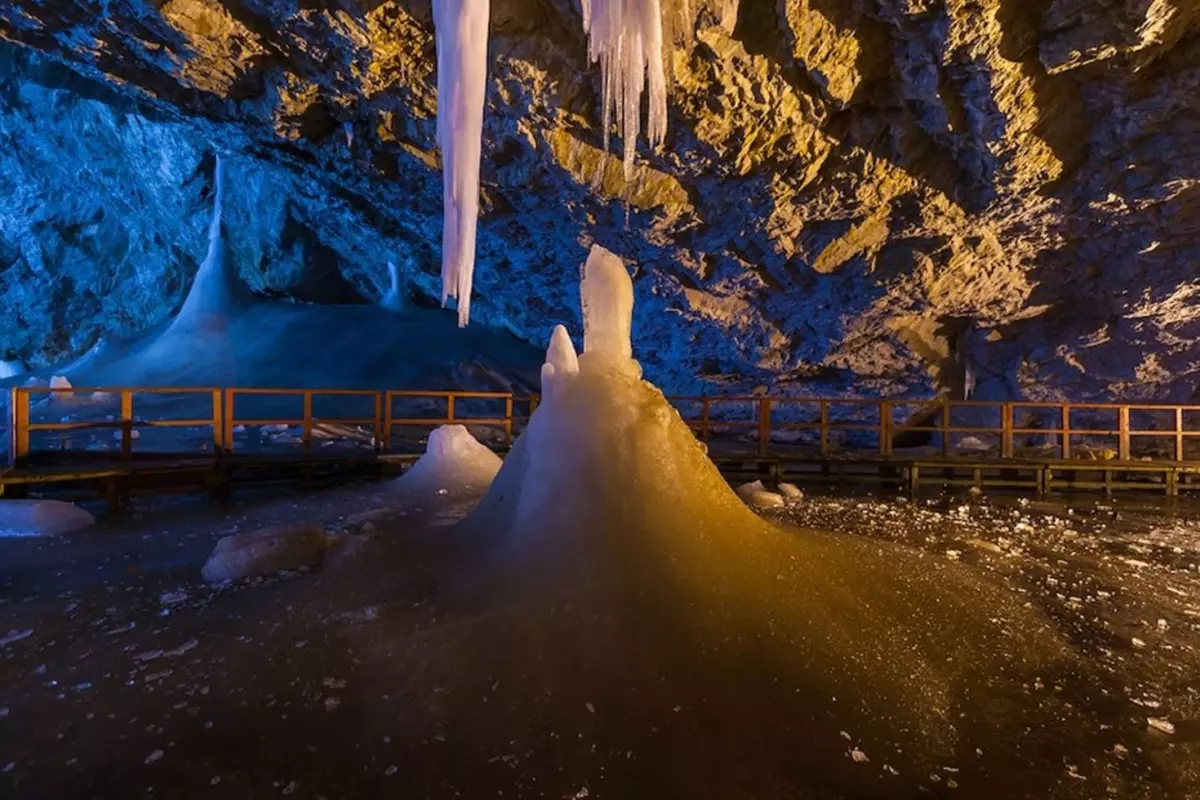
The Carpathian Mountains, which extend from Central Europe to the Balkans, came to the fore with a striking discovery. Research conducted in the part of the mountains within the borders of Romania unearthed a prehistoric bacterium preserved deep in the glaciers.
LIKE IT WAS IN A TIME CAPSULE
According to scientists’ analysis, a bacteria was found in the cave dating back to approximately 5,300 years ago, that is, to the Late Stone Age period. This creature, which remained isolated among ice sheets for thousands of years, has survived to the present day, preserved like a time capsule.
UNEXPECTED RESISTANCE TO ANTIBIOTICS
What really made the discovery remarkable was that the bacteria was resistant to the most powerful weapons of modern medicine. While many common antibiotics were tested in laboratory tests, a significant number of them were found to be ineffective on bacteria. This situation revealed that antibiotic resistance is not only a today’s problem, but a defense mechanism that nature has developed for thousands of years.
A NEW SPECIES THAT HAVE NEVER BEEN DESCRIBED BEFORE
The research was conducted within the Romanian Institute of Biology Academy. The samples were taken from underground glaciers in the Scarioara Glacier Cave, located in the northwest of the country. The science team found this ancient microorganism in the ice core extracted by going meters deep.
Cristina Purcarea, one of the authors of the study, announced that the findings were shared with the international scientific community through Frontiers in Microbiology. As a result of the investigations, it was stated that the bacterium was a new species that had not been described before and that it was introduced to the scientific literature under a different name.

THREAT OR OPPORTUNITY?
Another remarkable result of the research was that this bacterium had a slowing effect on the proliferation of some harmful microbes. While experts state that this feature may open the door to the development of new drugs in the future, they also point out the risk of similar ancient microorganisms entering nature as glaciers melt. According to scientists, this discovery both raises new questions in terms of global health and provides important clues about nature’s unknown defense systems.
