
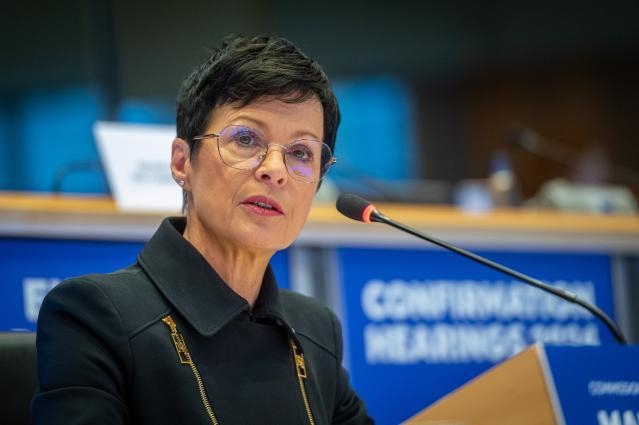
The European Commissioner for Enlargement, Marta Kos, said that the changes in the Law on Specialized Chambers of Kosovo contradict the basic obligations of the country towards the EU and are unacceptable. Speaking ahead of a meeting of EU foreign ministers in Luxembourg on October 12, Kos criticized the change in legal rules while court proceedings are still ongoing.
“I want to be clear that the changes in the Law on Specialized Chambers in Kosovo contradict the basic obligations of Kosovo towards the EU. This is unacceptable”Kos said.
According to her, changing the rules during the development of a judicial process contradicts the international standards of the rule of law. “My message is very simple. European enlargement is moving forward. If the candidate countries take steps backwards, they are not on the right track and will not be able to become members of the EU”she said.
Kosovo’s statement comes after the Assembly of Kosovo approved, last week, changes to the law that regulates the functioning of the Specialized Chambers in The Hague, known as the Special Court. The changes were proposed by the Democratic Party of Kosovo, just five days after the verdict of September 16, when the Specialized Chambers sentenced the former president of Kosovo, Hashim Thaçi, and three other former leaders of the Kosovo Liberation Army – Kadri Veselin, Jakup Krasniq and Rexhep Selim – to a total of 81 years in prison for war crimes. All four pleaded not guilty throughout the trial.
The legal changes aim to limit the jurisdiction of the Specialized Chambers, narrowing the time period and the categories of criminal offenses that they can handle. They foresee, among other things, the reduction of the maximum prison sentence to 15 years, the possibility of appeal to the Supreme Court of Kosovo and the serving of sentences in Kosovo.
The EU demands respect for the independence of the Special
The Kos declaration is the latest warning from the EU regarding legal changes. On October 8, the European External Action Service stated that the changes in the Law on Specialized Chambers are in violation of Kosovo’s international obligations towards the EU. In response, the EU emphasized that the Specialized Chambers are an independent judicial institution, established through the decisions of the Assembly of Kosovo in 2014 and 2015, and that their mandate and independence must be fully respected.
The EU called on Kosovo to respect international obligations, guarantee the independence of the court, justice for victims and their families from all communities, as well as the protection and safety of witnesses. Similar concerns were expressed by the German Embassy in Pristina, stressing that the independence of the Specialized Chambers cannot be violated. The PDK, on the other hand, opposed the assessment of the EU. The deputy of this party, Përparim Gruda, said that the changes do not violate any of Kosovo’s international obligations.
According to PDK, the aim is not to close the court, but to limit its mandate in accordance with the purpose for which it was established. Prime Minister Albin Kurti, meanwhile, had described the changes as urgent and not sufficiently analyzed, although his Vetëvendosje Movement supported them during the consideration in the Assembly. The Specialized Chambers are part of the Kosovo judicial system, but operate in The Hague with international judges and prosecutors. They were established to deal with allegations of crimes committed during and after the 1998-1999 war in Kosovo. The basis of their establishment is also related to Kosovo’s international agreements with the EU, including the 2014 exchange of letters, which provided for consultations on legal changes that could affect the court’s mandate.
Another obstacle in Kosovo-EU relations
The EU’s opposition to the changes in the Law on the Special Court adds another issue of disagreement in the relations between Brussels and Pristina, at a time when Kosovo has not yet received the status of a candidate country for membership in the bloc. Kosovo applied for membership in December 2022, but remains the only country in the Western Balkans without candidate status. Its progress towards the EU depends, among other things, on reforms in the rule of law, the functioning of democratic institutions and the normalization of relations with Serbia. In the last report on the enlargement, the European Commission emphasized that the rapprochement with the EU is conditioned by progress in democracy, the rule of law and respect for fundamental rights. He also reiterated the importance of normalizing relations with Serbia for Kosovo’s European perspective. Kosovo’s path to membership is also complicated by the fact that five EU member states – Spain, Greece, Romania, Slovakia and Cyprus – continue not to recognize its independence./ REL/
